Choosing a CNC cutting service isn’t just about finding the lowest quote. The right provider can save you time, reduce material waste, improve finish quality, and ensure your design is manufactured exactly as intended. A poor choice, on the other hand, may lead to inaccurate cuts, damaged materials, project delays, and additional costs.
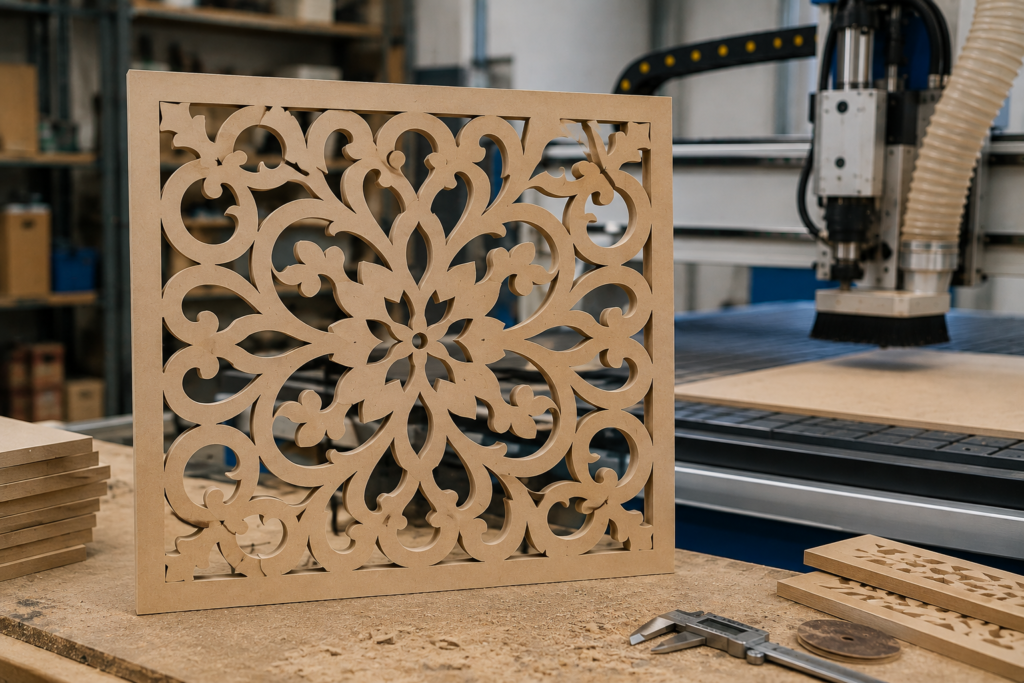
For homeowners and interior designers, CNC cutting plays a major role in creating decorative wall panels, custom furniture components, CNC jali designs, modular interiors, acrylic signage, and personalized nameplates. Every project demands precision, and even small measurement errors can affect installation and appearance.
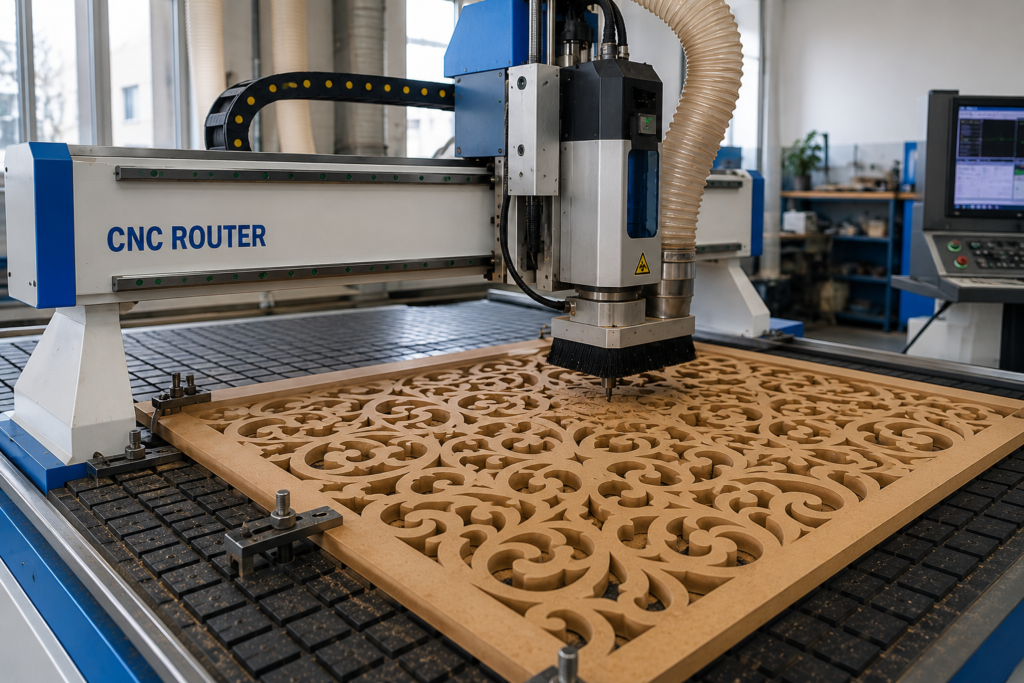
A reliable CNC manufacturer combines advanced machinery with skilled operators, quality materials, and practical experience. They understand how different materials behave during machining and adjust cutting parameters accordingly to achieve clean edges and accurate dimensions.
This guide explains the key factors to consider before selecting a CNC service provider. It also shares practical recommendations based on real manufacturing practices so you can make an informed decision for your next project.
Throughout this article, you’ll also see how Sourav CNC Works approaches quality, precision, and customer-focused CNC solutions without compromising on craftsmanship.
Why Choosing the Right CNC Service Matters
Many customers assume that all CNC cutting machines deliver the same results. In reality, the final outcome depends on several factors, including machine calibration, cutting tools, software, operator experience, and material handling.
A professional CNC service focuses on consistency. If your project includes multiple panels, every piece should have identical dimensions and clean finishing. This consistency becomes especially important in interior design projects where decorative panels or modular furniture components must fit together precisely.
Choosing an experienced provider also reduces common issues such as:
- Rough edges
- Burn marks on wood
- Chipped acrylic
- Incorrect dimensions
- Poor alignment
- Material wastage
- Delayed project completion
For homeowners investing in premium interiors, precision directly affects both aesthetics and installation quality.
Understand Your Project Requirements
Before contacting any CNC manufacturer, clearly define what your project requires.
Ask yourself:
- Which material will be used?
- What thickness is required?
- Will the product be installed indoors or outdoors?
- Is decorative detailing necessary?
- Do you have CAD drawings or only a rough sketch?
- How many pieces need to be manufactured?
Answering these questions helps the CNC service recommend the most suitable cutting method and material.
Common Residential CNC Applications
| Project | Common Material |
|---|---|
| Decorative Wall Panels | MDF |
| CNC Jali Designs | MDF, PVC |
| Modular Furniture | MDF, Plywood |
| Name Plates | Acrylic |
| Sign Boards | ACP, Acrylic |
| Interior Partitions | MDF, Wood |
The clearer your requirements, the easier it becomes for the manufacturer to estimate cost, production time, and material usage accurately.
Evaluate the CNC Manufacturer’s Experience
Experience goes beyond the number of years in business. Look for evidence that the company has successfully completed projects similar to yours.
A manufacturer specializing in industrial machine parts may not have the same expertise in decorative interior panels or custom signage.
When reviewing a CNC service provider, consider:
Portfolio
Look for completed work involving:
- CNC Jali
- Decorative panels
- Wooden partitions
- Acrylic signs
- Interior furniture
- Custom name plates
A diverse portfolio demonstrates versatility and practical knowledge.
Design Accuracy
Experienced manufacturers know how to adjust designs for different materials.
For example:
A pattern that looks perfect on a computer screen may require slight modifications before cutting MDF to maintain structural strength.
This practical understanding often comes only through years of production experience.
Customer Communication
Reliable CNC manufacturers ask detailed questions before production begins.
They confirm:
- Measurements
- Material selection
- Thickness
- Finishing requirements
- Edge quality
- Delivery schedule
Clear communication helps prevent costly mistakes later.
Check Machine Quality and Technology
Even the best designs depend on machine accuracy.
Modern CNC routing machines offer better precision, smoother finishes, and faster production compared to outdated equipment.
Ask the manufacturer about:
- Machine size
- Maximum cutting area
- Supported materials
- Software compatibility
- Precision tolerance
- Maintenance schedule
Well-maintained machines generally produce cleaner cuts and reduce the likelihood of dimensional errors.
Signs of a Professional CNC Workshop
- Clean working environment
- Organized material storage
- Proper dust collection systems
- Regular machine maintenance
- Calibrated equipment
- Digital design workflow
A well-managed workshop often reflects disciplined production processes.
Material Expertise Matters
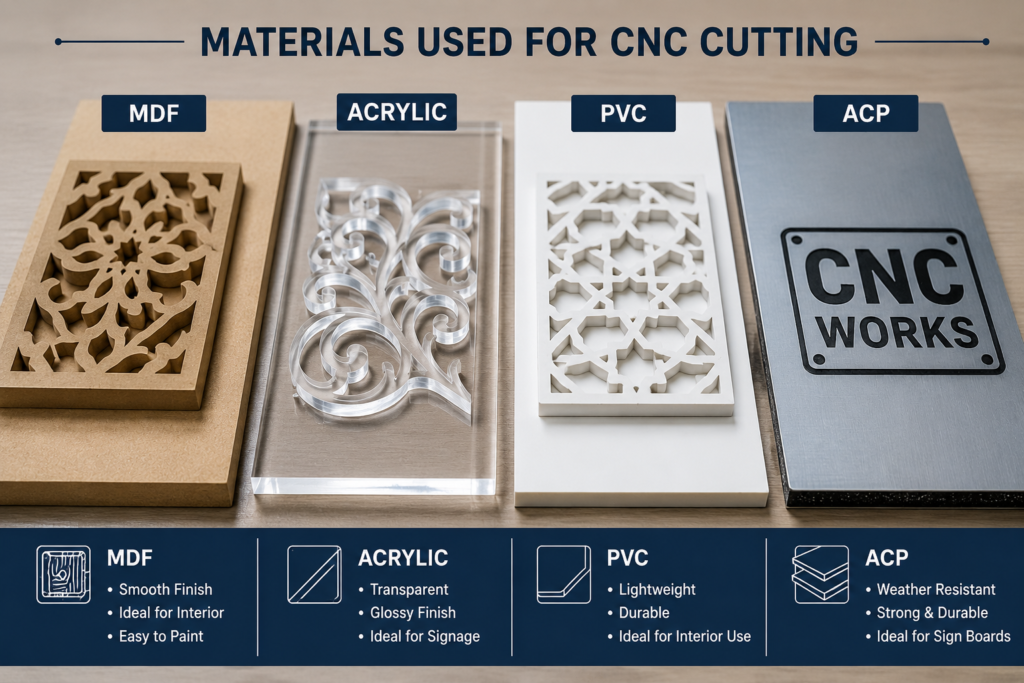
Different materials require different cutting techniques.
A CNC service should understand how feed rates, spindle speed, tooling, and cooling affect each material.
MDF
Ideal for decorative wall panels, furniture, and CNC jali designs.
Advantages:
- Smooth cutting
- Excellent detailing
- Easy finishing
- Cost-effective
Acrylic
Requires sharp tools and controlled cutting speeds.
Proper machining prevents:
- Cracks
- Melting
- Chipping
- Surface scratches
PVC
Suitable for lightweight decorative applications.
Proper tool selection ensures smooth edges without deformation.
ACP (Aluminium Composite Panel)
Widely used in exterior signage.
Requires careful depth control to avoid damaging the aluminum layers.
Natural Wood
Each wood species behaves differently.
Experienced CNC operators account for:
- Grain direction
- Moisture content
- Hardness
- Tool wear
This attention to detail produces cleaner finishes and reduces the need for additional sanding.
Design Support and Customization
Not every customer has production-ready files.
Many homeowners approach a CNC workshop with:
- Inspiration images
- Hand sketches
- Pinterest references
- Basic measurements
A capable CNC service should assist in converting these ideas into manufacturable CAD drawings.
Good design support includes:
- Vector file preparation
- Dimension verification
- Material recommendations
- Pattern optimization
- Structural adjustments
- Nesting layouts to minimize material waste
For interior designers, this collaboration can save significant time during project planning and ensure the final product aligns with the original design intent.
Quality Control Standards
Quality should be checked before, during, and after cutting—not only at the end of production.
Professional CNC manufacturers typically inspect:
- Material quality before machining
- CAD file accuracy
- Machine calibration
- Cutting precision
- Edge finish
- Hole alignment
- Final dimensions
Expert Tip
For decorative interior panels, request a sample cut or prototype before approving large production runs. A small trial piece helps verify dimensions, finish quality, and material suitability, reducing the risk of costly errors.
Questions to Ask Before Hiring a CNC Service
Selecting a CNC service becomes much easier when you ask the right questions before placing your order. A professional manufacturer should be transparent about their capabilities, production process, and timelines.
Ask these questions:
- What materials do you specialize in?
- Can you manufacture from CAD, DXF, or AI files?
- Do you offer design assistance if I don’t have production drawings?
- What is your expected turnaround time?
- Can I see samples of similar completed projects?
- How do you inspect quality before delivery?
- What cutting tolerances can you achieve?
- Do you handle custom one-off projects as well as bulk orders?
A knowledgeable provider will answer these confidently and explain how they plan to execute your project rather than offering vague promises.
Comparing CNC Service Providers
Choosing solely on price can lead to disappointing results. Consider the overall value each provider offers.
| Factor | Professional CNC Service | Low-Cost Provider |
|---|---|---|
| Design Support | Yes | Limited |
| Material Guidance | Yes | Rare |
| Cutting Accuracy | High | Inconsistent |
| Machine Maintenance | Regular | Often Unknown |
| Quality Inspection | Multiple Stages | Minimal |
| Communication | Clear & Responsive | Limited |
| Delivery Reliability | Better | Can Vary |
| Long-Term Value | High | May Increase Rework Costs |
For homeowners and interior designers, reliable workmanship often saves more money than choosing the cheapest quote.
Cost Factors That Influence CNC Cutting
No two projects cost exactly the same. Pricing depends on several practical factors.
Material Type
Premium materials generally cost more and may require specialized tooling.
Examples include:
- Acrylic
- ACP
- Hardwood
- High-density MDF
Material Thickness
Thicker sheets require slower cutting speeds and sometimes multiple tool passes.
Design Complexity
Simple geometric shapes are quicker to produce than intricate decorative patterns or detailed CNC jali designs.
Quantity
Bulk production usually reduces the cost per piece because machine setup time is shared across multiple components.
Finishing Requirements
Additional services such as sanding, polishing, painting, edge finishing, engraving, or assembly increase the overall project cost.
Rather than asking, “What is the cheapest CNC service?” ask, “Which provider offers the best balance of quality, precision, and value?”
Common Mistakes Customers Make
Avoiding these mistakes can save both time and money.
Choosing Based Only on Price
Low quotations may reflect lower-grade materials, worn tooling, or limited quality control.
Providing Incomplete Measurements
Small dimension errors can affect installation, especially for wall panels, partitions, and furniture components.
Ignoring Material Suitability
A design that works beautifully in MDF may not produce the same result in acrylic or natural wood.
Skipping Sample Approval
For custom projects, reviewing a sample or prototype helps identify adjustments before full production.
Not Discussing Finishing Requirements
Clarify expectations for edge quality, engraving depth, paint readiness, or polishing before production begins.
Professional Recommendations from Industry Experience
Projects run more smoothly when design, material selection, and manufacturing are planned together rather than treated as separate steps.
Some practical recommendations include:
- Share clear reference images if you don’t have CAD drawings.
- Confirm all dimensions before machining starts.
- Ask for material samples if you’re unsure about the finish.
- Consider installation requirements during the design stage.
- Choose manufacturers who explain technical limitations honestly rather than promising unrealistic results.
Good communication between the customer and the CNC service provider often produces better results than frequent design revisions later.
Quality Checkpoints Before Delivery
Before accepting your finished components, inspect the following:
✔ Overall dimensions match approved drawings.
✔ Edges are smooth without excessive chipping.
✔ Decorative patterns are symmetrical.
✔ Hole positions are correctly aligned.
✔ No visible cracks or burn marks.
✔ Surface remains clean and free from unnecessary scratches.
✔ Material thickness matches specifications.
✔ Quantity is complete.
These simple checks help ensure your project is ready for installation.
Safety Considerations
While CNC cutting is performed by trained professionals, proper handling after delivery is equally important.
For larger decorative panels:
- Transport panels on flat supports.
- Avoid excessive bending.
- Store materials in a dry environment before installation.
- Protect polished acrylic surfaces until installation is complete.
- Wear suitable protective equipment when trimming or installing panels on-site.
Good handling preserves the precision achieved during manufacturing.
Maintenance Tips for CNC-Cut Products
Maintenance depends on the material used, but a few general practices apply to most interior CNC products.
MDF Panels
- Keep away from prolonged moisture exposure.
- Dust regularly using a soft cloth.
- Repaint if surface coatings become worn.
Acrylic Products
- Clean using a microfiber cloth.
- Avoid harsh chemical cleaners.
- Remove dust gently to reduce surface scratches.
Wooden Decorative Panels
- Maintain indoor humidity where possible.
- Apply protective coatings when recommended.
- Avoid direct water exposure.
ACP Signage
- Wash periodically with mild soap and water.
- Inspect fasteners during routine maintenance.
Proper care extends product life and helps preserve appearance over time.
Why Many Customers Choose Sourav CNC Works
Every custom project presents unique challenges, from selecting the right material to achieving precise detailing. At Sourav CNC Works, our approach is to understand the customer’s requirements before recommending a manufacturing solution.
Our services include:
- CNC Cutting
- MDF Cutting
- PVC Cutting
- Acrylic Cutting
- ACP Cutting
- Wood Cutting
- CNC Jali Design
- Decorative Panels
- Interior CNC Design
- Custom Name Plates
- 3D Letter Signage
By combining modern CNC equipment with careful planning and quality checks, we aim to deliver components that are accurate, cleanly finished, and ready for installation.
Frequently Asked Questions
1. How do I choose the best CNC cutting service?
Look for experience, machine quality, material expertise, design support, transparent communication, and a portfolio of similar projects.
2. What files are required for custom CNC cutting?
Most CNC manufacturers accept DXF, DWG, AI, SVG, EPS, or other vector-based CAD files. Some also assist with converting sketches into production-ready drawings.
3. Which material is best for decorative CNC wall panels?
MDF is a popular choice because it offers smooth machining, detailed cutting, and a paint-ready surface. The best material ultimately depends on the project’s location, finish, and budget.
4. Can I order a single custom CNC-cut design?
Yes. Many CNC service providers produce one-off custom projects as well as larger production runs.
5. Does intricate CNC cutting cost more?
Generally, yes. Designs with finer details require longer machining times, additional toolpaths, and more careful finishing.
6. How accurate are CNC cutting machines?
Modern CNC routers can achieve excellent dimensional accuracy when properly calibrated and operated by experienced professionals. Actual tolerances vary depending on the machine, tooling, and material.
7. How long does a CNC cutting project take?
Turnaround depends on design complexity, material availability, order quantity, and finishing requirements. Your CNC provider should provide an estimated timeline before production begins.
8. Can CNC cutting be used for interior design projects?
Yes. CNC cutting is widely used for wall panels, partitions, furniture components, decorative screens, ceilings, signage, and customized interior features.
9. Is design assistance available if I don’t have CAD drawings?
Many professional CNC manufacturers offer design support, helping convert hand sketches or reference images into production-ready files.
10. Why is quality control important in CNC cutting?
Quality inspections help ensure accurate dimensions, smooth finishes, proper alignment, and consistency across all manufactured parts, reducing installation issues and costly rework.
Call to Action
Choosing the right CNC service is about more than finding a machine—it’s about partnering with a team that understands materials, precision, and the practical demands of your project. If you’re planning custom interiors, decorative panels, signage, or bespoke cutting work, Sourav CNC Works offers tailored CNC solutions backed by careful planning, modern equipment, and attention to detail. Contact us to discuss your project, review your drawings, or get guidance on selecting the most suitable material and manufacturing approach.