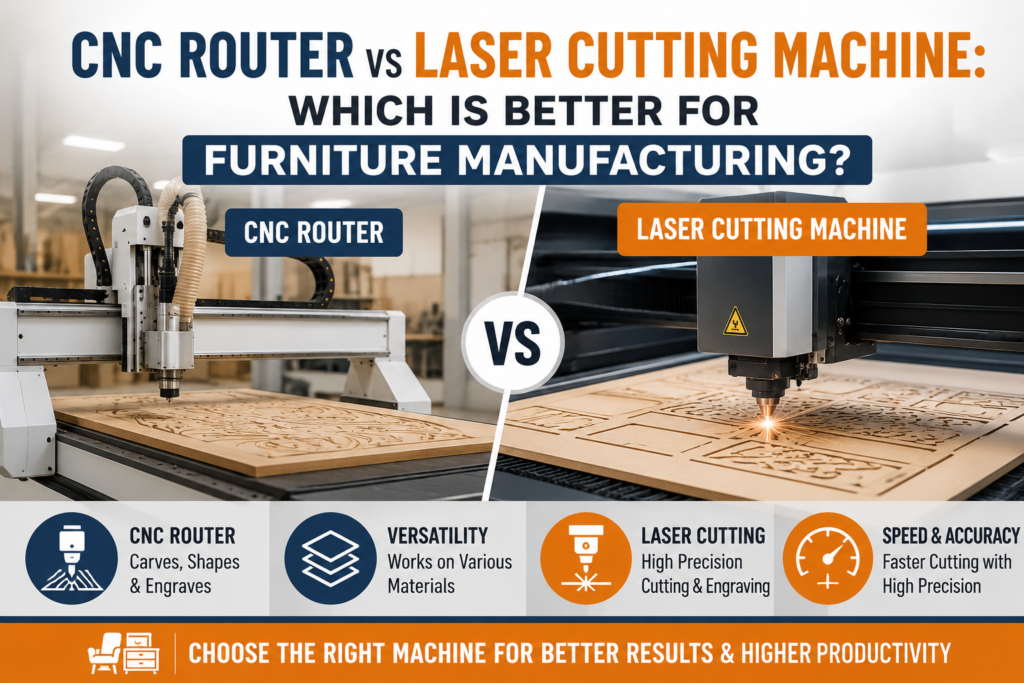
Furniture manufacturers evaluating new cutting equipment almost always reach the same fork in the road:
should the factory invest in a CNC router or a laser cutting machine? Both technologies are computer controlled, both can process sheet material with impressive accuracy, and both are marketed heavily to
woodworking and furniture businesses. Yet the two machines are built on fundamentally different cutting
principles, and choosing the wrong one for your product mix can mean slower production, higher tooling
costs, or edge quality that doesn’t match your customer’s expectations.
This comparison is written specifically for furniture manufacturers, cabinet makers, and modular furniture
factories deciding between these two technologies. We will walk through how each machine actually cuts
material, where each one clearly outperforms the other, and which factors should drive your final decision
not marketing claims, but the practical engineering differences that affect your daily production output.
By the end of this guide, you will know exactly which situations call for a CNC router, which call for a laser
cutter, and why many established furniture factories eventually end up owning both, using each machine for the tasks it does best.
How a CNC Router Works
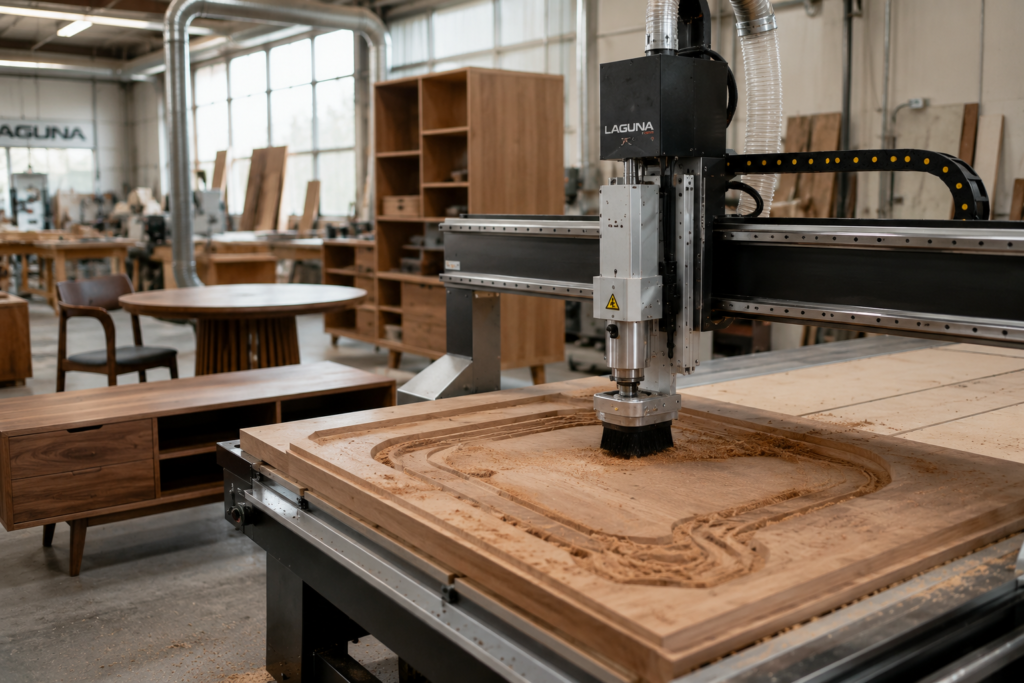
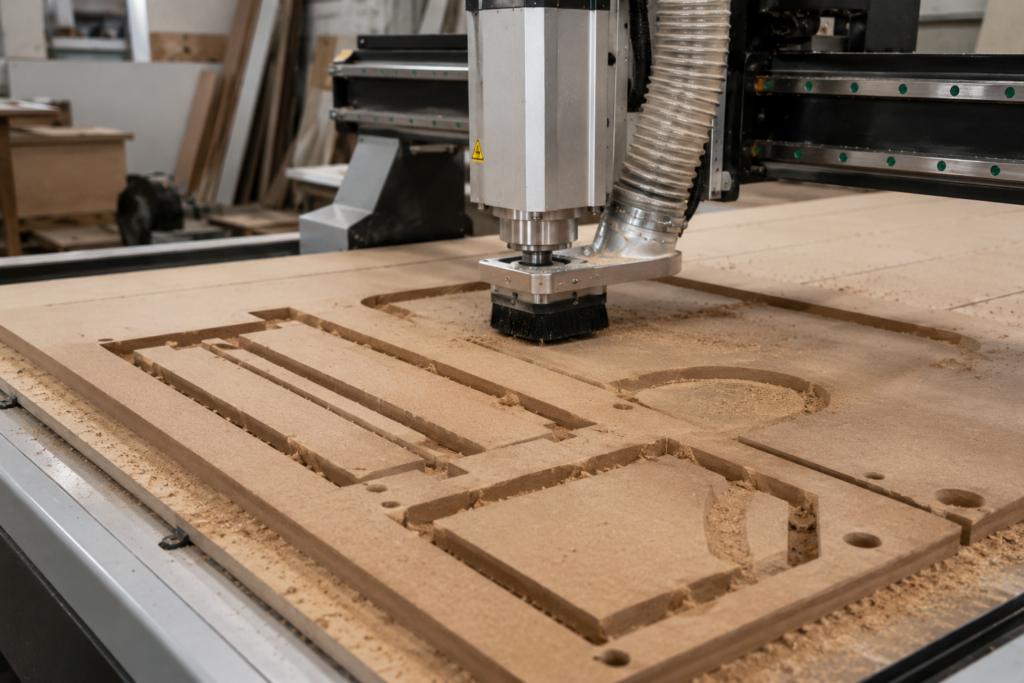
A CNC router uses a rotating cutting tool — a physical bit spinning at high speed — to mechanically remove material along a programmed path. The spindle moves across the X, Y, and Z axes, cutting through wood, MDF, plywood, acrylic, and composite panels at depths the operator specifies in the toolpath. Because the tool physically contacts the material, cutting force and tool geometry both directly affect the finished edge.
How a Laser Cutting Machine Works
A laser cutter uses a focused beam of light — typically from a CO2 or fiber laser source — to burn, melt, or vaporize a path through the material. There is no physical tool contact, no mechanical cutting force, and virtually no tool wear in the traditional sense, since the “cutting tool” is light itself, focused through a lens onto the material surface.
This fundamental difference — mechanical removal versus thermal removal — is the root cause of nearly
every practical difference between the two machines discussed below.
Key Differences Between CNC Routers and Laser Cutters
Cutting method.
Cutting method. CNC routers remove material mechanically with a rotating bit. Laser cutters remove
material thermally with a focused beam.
Material thickness handling.
CNC routers cut thick sheet goods and solid wood with ease, often up to
40mm or more depending on spindle power. Laser cutters are generally limited to thinner materials, since
cutting speed drops sharply as thickness increases, and thick wood cutting on a laser often produces
excessive charring.
Heat effect.
CNC routing produces minimal heat, since the tool physically shears material rather than
burning it. Laser cutting always introduces localized heat, which can scorch or discolor the cut edge on
wood-based materials.
3D capability.
CNC routers can perform pocketing, relief carving, and 3D contouring by varying cutting
depth. Laser cutters fundamentally cut through material in a flat plane and cannot perform true 3D shaping.
Detail and kerf width.
Laser cutters achieve extremely fine kerf widths and can cut intricate, delicate
patterns that would challenge even a small-diameter router bit, particularly in thinner acrylic or veneer.
Material Compatibility Comparison
CNC routers handle the full range of materials furniture manufacturers typically work with: solid hardwood, plywood, MDF, particleboard, acrylic, PVC, foam, and — with the right spindle and tooling aluminium composite panels. This versatility makes a single CNC router suitable for nearly an entire furniture production line.
Laser cutters perform best on thinner acrylic, thin plywood, veneer, paper-based materials, and some
plastics. They struggle with thick hardwood and are generally unsuitable for MDF in production volumes,
since MDF’s resin content tends to produce heavy smoke and edge discoloration under a laser beam.
Cutting Thickness and Depth Capability
For furniture components like cabinet carcasses, shelving, and structural panels — typically 12mm to 25mm plywood or MDF — a CNC router is the clear choice. It cuts these thicknesses cleanly and at production speed, while a laser cutter would either struggle significantly or require multiple slow passes with a compromised edge finish.
Laser cutters excel instead at thin decorative components: acrylic inlays, veneer overlays, and fine lattice or
perforated panel details where material thickness rarely exceeds 6mm to 10mm.
Edge Quality and Finish Comparison
CNC-routed edges on wood-based materials are generally clean and ready for edge-banding or minimal
sanding, particularly when using a compression bit designed to prevent top and bottom surface chipping on veneered panels.
Laser-cut edges on wood materials typically show a visible char line, which may be acceptable for some
decorative or artistic applications but is usually undesirable for structural furniture components meant to be edge-banded or painted, since the discoloration can show through certain finishes.
Speed and Production Volume
For high-volume sheet-good processing — cutting dozens of cabinet panels from full 4×8 sheets — a CNC router with an automatic tool changer significantly outpaces a comparable laser system, since router cutting speed through thick material is generally faster than laser cutting speed at the same thickness.
Laser cutters can be extremely fast on thin materials with intricate detail, sometimes completing fine
decorative patterns faster than a router could achieve the same level of detail with a small-diameter bit.
Cost Comparison: Purchase and Running Cost
CNC routers generally have a lower running cost per cut for thick sheet material, since tooling costs (router bits) are relatively inexpensive compared to laser source replacement or maintenance costs on higher-power laser systems.
Laser cutters, particularly fiber laser systems for cutting or CO2 systems for engraving, can have higher
running costs tied to laser tube or source lifespan, cooling system maintenance, and higher electricity
consumption at full power. However, laser systems typically require less tooling inventory, since there is no physical bit to wear out or replace.
Which Machine Suits Furniture Manufacturing Better?
For the core of furniture and cabinetry production cutting structural panels, joinery, hardware boring,
and shelving from plywood, MDF, and solid wood a CNC router is almost always the better primary
investment. It handles the material thicknesses, volumes, and edge-quality requirements that furniture
manufacturing demands as a baseline.
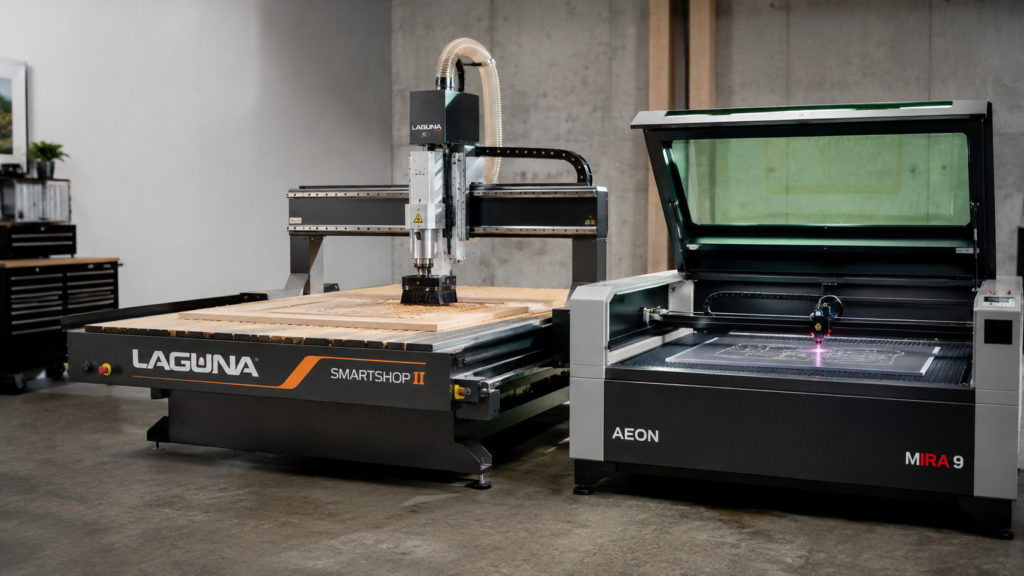
A laser cutter becomes valuable as a complementary machine for decorative inlay work, fine acrylic signage components integrated into furniture design, or intricate veneer detailing that a router bit cannot reproduce as finely. Very few furniture factories run laser cutting as their primary production method; most that own one use it for the detail work a router cannot match.
Real-World Examples
Example 1.
A modular furniture manufacturer using a 4×8 CNC router reduced MDF waste by optimizing sheet nesting and increased production capacity without hiring additional operators a result that would
not have been achievable on a laser system given MDF’s poor compatibility with laser cutting at production thickness.
Example 2.
An interior design company used CNC routing to create decorative wall panels for a hotel, achieving consistent quality across hundreds of panels, since the router’s 3D pocketing capability allowed varied relief depth that a flat-cutting laser system could not replicate.
Example 3.
A furniture brand producing acrylic-inlay cabinet fronts added a laser cutter alongside its existing CNC router specifically for the fine acrylic detail work, while keeping all structural panel cutting on the router a hybrid approach increasingly common among design-forward furniture manufacturers.
Comparison Table
| Factor | CNC Router | Laser Cutter |
| Cutting Method | Mechanical (rotating bit) | Thermal (focused laser beam) |
| Best Material Thickness | Thick sheet goods, solid wood | Thin acrylic, veneer, plastics |
| Edge Quality on Wood | Clean, minimal heat effect | Charred edge, visible discoloration |
| 3D Contouring | Yes, full depth control | No, flat cutting only |
| Detail Precision | Good, limited by bit diameter | Excellent for fine detail |
| Running Cost (Thick Material) | Lower | Higher |
| Best Use in Furniture | Structural panels, joinery, carcass work | Decorative inlay, fine acrylic detail |
Common Mistakes When Choosing Between the Two
Many buyers choose a laser cutter expecting it to handle their entire furniture production line, only to
discover it cannot process MDF or thick plywood at acceptable speed and finish quality. Others purchase a
CNC router but expect laser-level fine detail on thin acrylic inlays, then find bit diameter limitations
frustrating for very intricate patterns.
A related mistake is ignoring running costs during the purchase decision — a laser system with an aging
tube or source can become expensive to maintain, an ongoing cost some buyers overlook when comparing only the initial purchase price against a CNC router.
Expert Recommendations
- Choose a CNC router as your primary machine if more than 70% of your work involves plywood, MDF, or solid wood over 10mm thick.
- Add a laser cutter only once you have a clear, recurring need for fine acrylic or veneer detail work.
- Test both machines with your actual materials before purchase — edge quality differences are easier to judge in person than on a specification sheet.
- Budget for router bit replacement as an ongoing cost, and compare it honestly against laser source
maintenance costs. - If your product line includes both structural panels and decorative acrylic elements, plan for a hybrid
workflow rather than forcing one machine to do both jobs.
FAQs
Q: Can a laser cutter replace a CNC router entirely in furniture manufacturing?
Ans: Generally no. Laser cutters struggle with the thickness and material types (MDF, thick plywood, solid wood) that form the backbone of most furniture production.
Q: Is laser cutting cheaper than CNC routing?
Ans: Initial machine cost varies by model, but running costs depend heavily on material thickness and laser source type. For thick sheet goods, CNC routing is typically more cost-effective per part.
Q: Does laser cutting leave a burnt edge on wood?
Ans: Yes, laser cutting always introduces some thermal discoloration on wood-based materials, which CNC routing avoids since it cuts mechanically rather than thermally.
Q: Can a CNC router achieve the same fine detail as a laser cutter?
Ans: CNC routers can achieve high detail, but they are limited by the smallest available bit diameter, whereas lasers can cut finer, more intricate patterns in thin materials.
Q: Which machine is better for cutting acrylic?
Ans: Both can cut acrylic well. Laser cutters typically produce a polished, flame-cut edge on acrylic, while CNC routers produce a matte, tool-cut edge that some applications prefer for consistency with other routed components.
Q: Do furniture factories commonly own both machines?
Ans: Yes, many established manufacturers use a CNC router for structural production and a laser cutter for decorative detail work, treating the two as complementary rather than competing technologies.
Conclusion
Choosing between a CNC router and a laser cutter comes down to understanding what each machine
physically does to material. A CNC router mechanically shapes thick sheet goods and solid wood with
strength and versatility that suits the core of furniture manufacturing. A laser cutter thermally cuts thin
materials with exceptional fine detail, making it a strong complementary tool rather than a primary
production machine for most furniture businesses.
For manufacturers building a new production line, the CNC router remains the foundational investment,
with a laser cutter added later as decorative detail requirements grow.
Call to Action
If you are deciding between a CNC router and a laser cutter for your furniture production line, our team can help you evaluate your material mix and product requirements to recommend the right machine or the right combination of machines for your factory. Contact us today for a personalized consultation or a live demonstration using your own materials and designs.