Interior design has evolved far beyond painted walls and standard furniture. Modern homes, offices, hotels, restaurants, and retail stores now demand customized decorative elements that combine functionality with aesthetics. Creating these intricate designs manually is time-consuming and often lacks consistency. This is where MDF CNC Cutting has transformed the interior manufacturing industry.
Medium Density Fiberboard (MDF) is one of the most widely used engineered wood products for interior applications because of its smooth surface, uniform density, and excellent machining properties. When paired with CNC router technology, MDF can be cut into highly detailed decorative panels, furniture components, partitions, and architectural elements with remarkable precision.
At Sourav CNC Works, we regularly manufacture custom CNC-cut MDF products for interior designers, furniture manufacturers, architects, and homeowners. From simple geometric panels to complex MDF Jali Design patterns, CNC technology allows us to achieve clean edges, consistent dimensions, and repeatable quality that is difficult to match with manual cutting methods.
This guide explains the Top 10 Uses of MDF CNC Cutting in Interior Design, along with practical recommendations, industry best practices, and factors to consider before choosing MDF for your next project.
Why MDF is Ideal for CNC Cutting
Not every wood-based material delivers the same cutting quality. MDF has become the preferred choice for CNC machining because it offers several practical advantages for decorative and furniture applications.
Smooth Surface Finish
Unlike natural wood, MDF has no visible grain. This allows CNC routers to produce smooth edges and highly detailed patterns without uneven cutting.
Uniform Density
The consistent density of MDF ensures predictable machining, resulting in accurate cuts across the entire sheet.
Easy Finishing
MDF accepts paint, laminate, veneer, acrylic finishes, and PVC coatings exceptionally well, making it suitable for various interior themes.
Budget-Friendly
Compared to solid hardwood, MDF provides an excellent balance between appearance, machining quality, and project cost.
Suitable for Intricate Designs
Modern CNC routers can create floral, geometric, traditional Indian, Arabic, and contemporary patterns with impressive precision.
1. Decorative MDF Jali Design
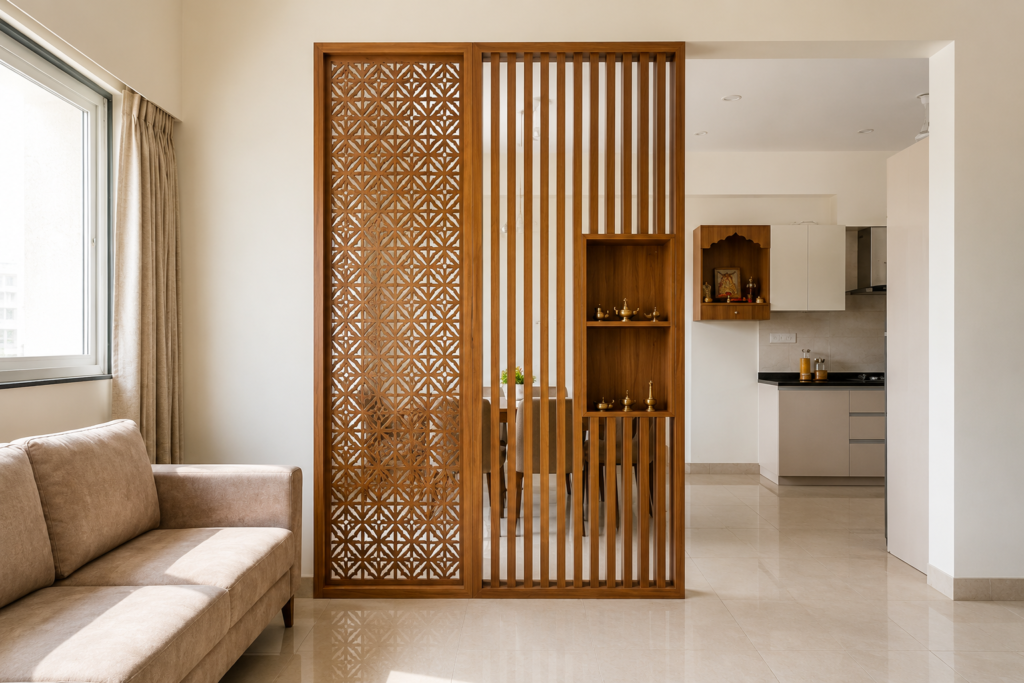
One of the most popular applications of MDF CNC Cutting is the creation of decorative jali panels. These panels add elegance while maintaining openness within interior spaces.
Instead of constructing permanent walls, designers often install decorative partitions that provide privacy without blocking airflow or natural light.
Common Applications
-
- Living room partitions
-
- Dining room separators
-
- Temple back panels
-
- Balcony privacy screens
-
- Staircase side panels
-
- Hotel lobby decorations
Benefits
-
- Attractive appearance
-
- Lightweight installation
-
- Customizable patterns
-
- Smooth finishing
-
- Easy painting
-
- Affordable compared to handcrafted wooden jali
Our experience at Sourav CNC Works shows that customers often prefer custom-sized jali panels because they reduce installation adjustments and maintain pattern continuity across large spaces.
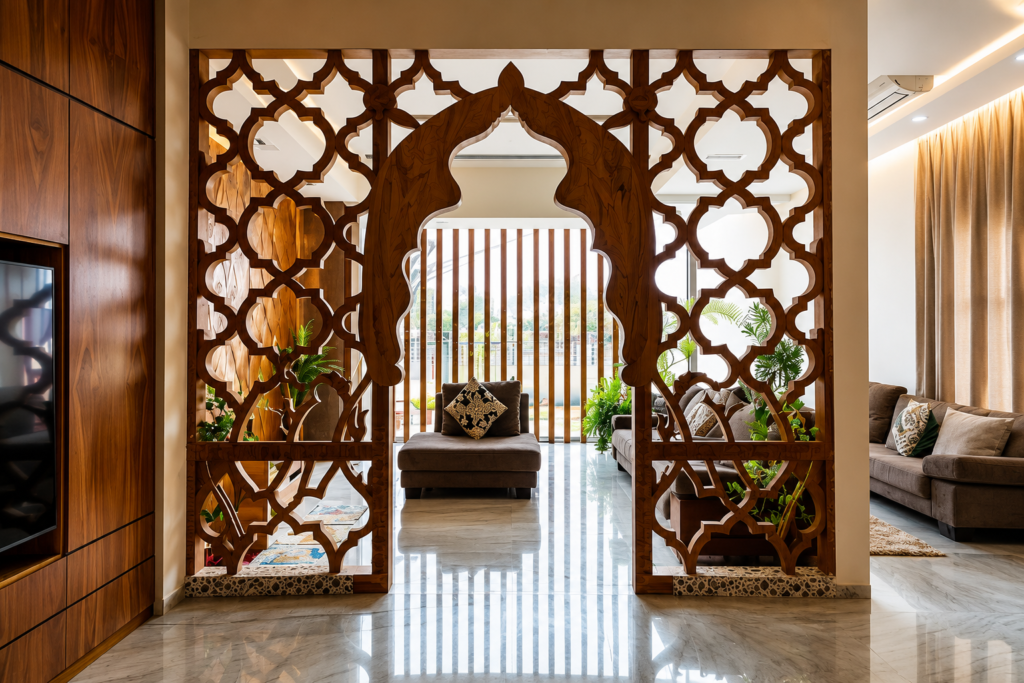
Looking for more inspiration? Explore our Best CNC Jali Design Ideas for Home, Office & Temple for creative partition, wall panel, and decorative jali designs.
2. Decorative Wall Panels
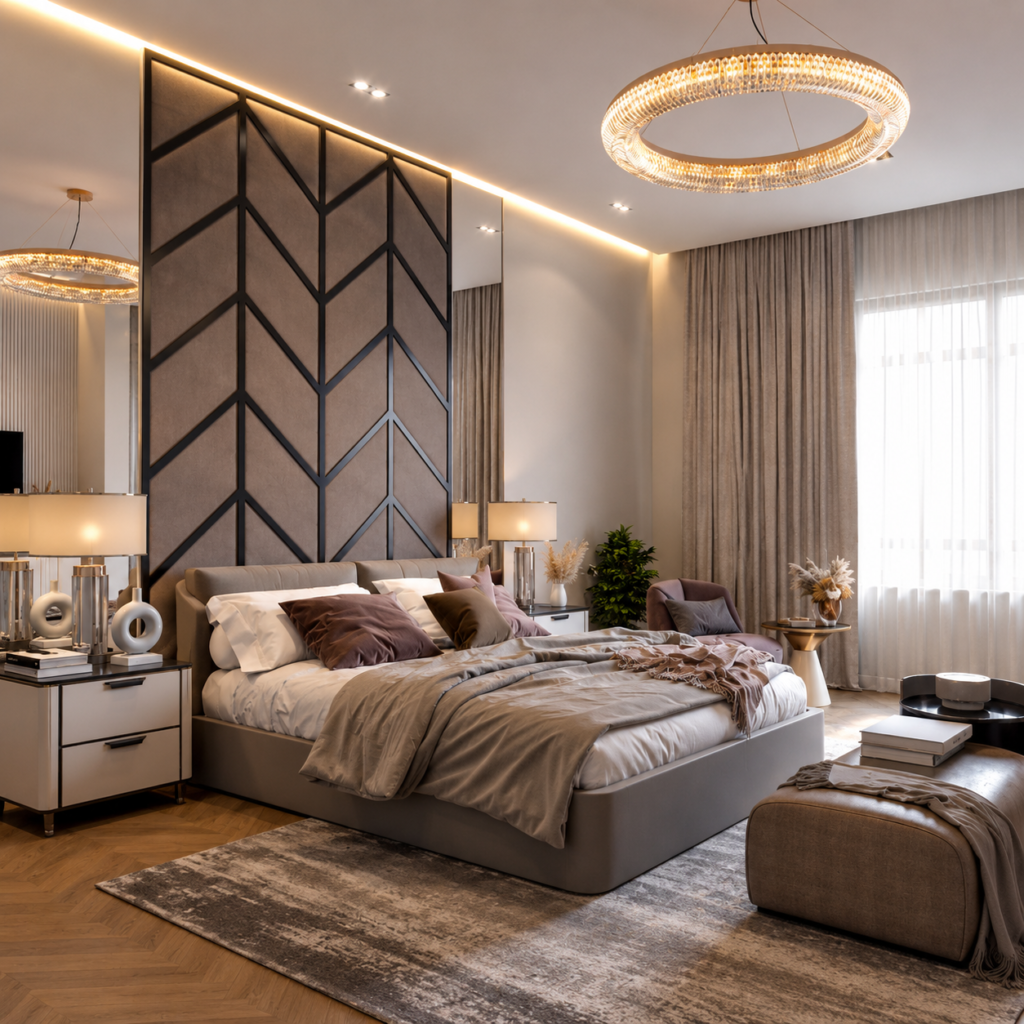
Accent walls have become a defining feature of contemporary interiors. Instead of plain painted surfaces, CNC-cut MDF wall panels create depth, texture, and visual appeal.
Popular wall panel designs include:
-
- Geometric patterns
-
- Floral artwork
-
- Modern abstract designs
-
- Traditional Indian motifs
-
- Minimalist line patterns
Many designers combine CNC-cut panels with LED backlighting to create premium feature walls in homes and commercial interiors.
Best Installation Areas
-
- TV units
-
- Reception walls
-
- Hotel lobbies
-
- Bedroom headboard walls
-
- Restaurant interiors
-
- Office reception areas
3. Room Divider and Partition Panels
Open-plan interiors often require space separation without making the area feel smaller. CNC-cut MDF partitions provide an elegant solution.
Unlike brick walls, decorative partitions maintain openness while clearly defining different functional areas.
Ideal Applications
-
- Living and dining room separation
-
- Office cabins
-
- Retail stores
-
- Beauty salons
-
- Restaurants
-
- Hotels
Advantages
-
- Easy installation
-
- Lightweight construction
-
- Decorative appearance
-
- Fully customizable
-
- Cost-effective compared to solid wood partitions
Professional interior designers frequently recommend CNC-cut partitions because they combine functionality with decorative value.
4. CNC Furniture Components
Furniture manufacturing has changed significantly with CNC machining. Precision-cut MDF components ensure that every cabinet, wardrobe, and storage unit fits accurately during assembly.
Common Furniture Components
-
- Cabinet doors
-
- Wardrobe shutters
-
- Drawer fronts
-
- Bed headboards
-
- Side panels
-
- Coffee tables
-
- Study desks
-
- Display units
-
- Modular furniture
Manual Cutting vs MDF CNC Cutting
| Feature | Manual Cutting | MDF CNC Cutting |
|---|---|---|
| Accuracy | Moderate | High Precision |
| Speed | Slow | Fast Production |
| Repeat Orders | Difficult | Consistent |
| Material Waste | Higher | Lower |
| Complex Designs | Limited | Excellent |
| Surface Finish | Depends on Skill | Uniform Quality |
For furniture manufacturers, CNC machining reduces production time while maintaining consistent quality across every component.
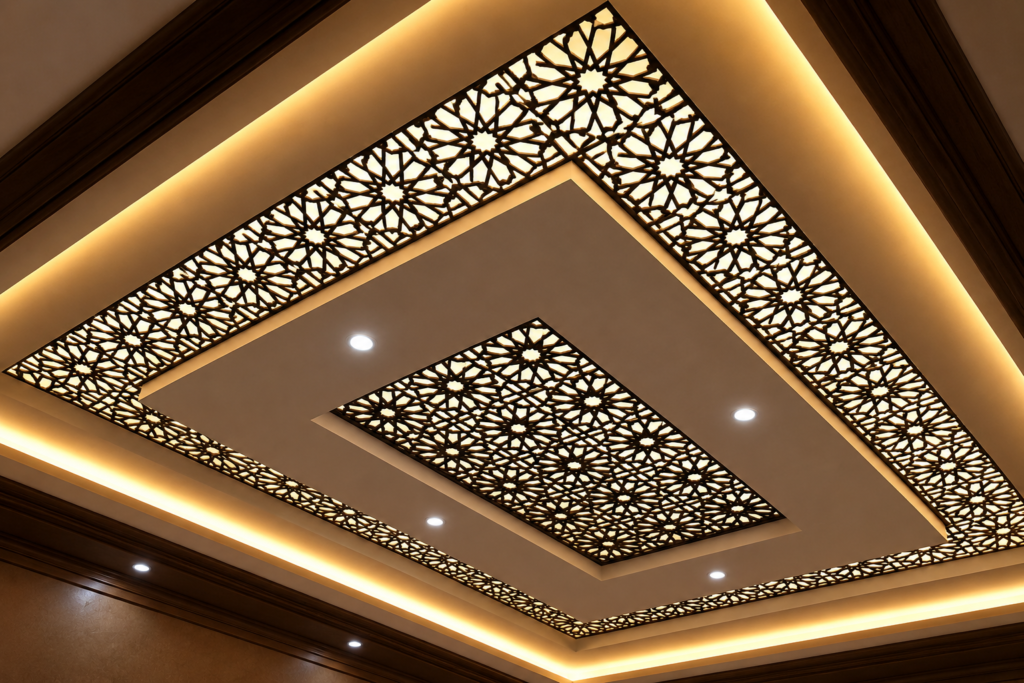
5. False Ceiling Decorative Panels
False ceilings are no longer limited to gypsum boards and simple wooden frames. Modern interiors increasingly use MDF CNC Cutting to create decorative ceiling panels that enhance both aesthetics and lighting effects.
CNC-cut MDF panels can be customized with geometric patterns, floral motifs, contemporary designs, or traditional artwork to match the overall interior theme.
Popular Ceiling Applications
-
- Living room ceilings
-
- Bedroom false ceilings
-
- Hotel reception ceilings
-
- Restaurant dining areas
-
- Office conference rooms
-
- Showrooms
Benefits
-
- Elegant appearance
-
- Easy customization
-
- Excellent paint finish
-
- Compatible with LED lighting
-
- Cost-effective compared to handcrafted ceiling designs
Professional Tip:
When installing MDF ceiling panels, maintain adequate spacing from moisture-prone areas and use high-quality primers before painting to improve durability.
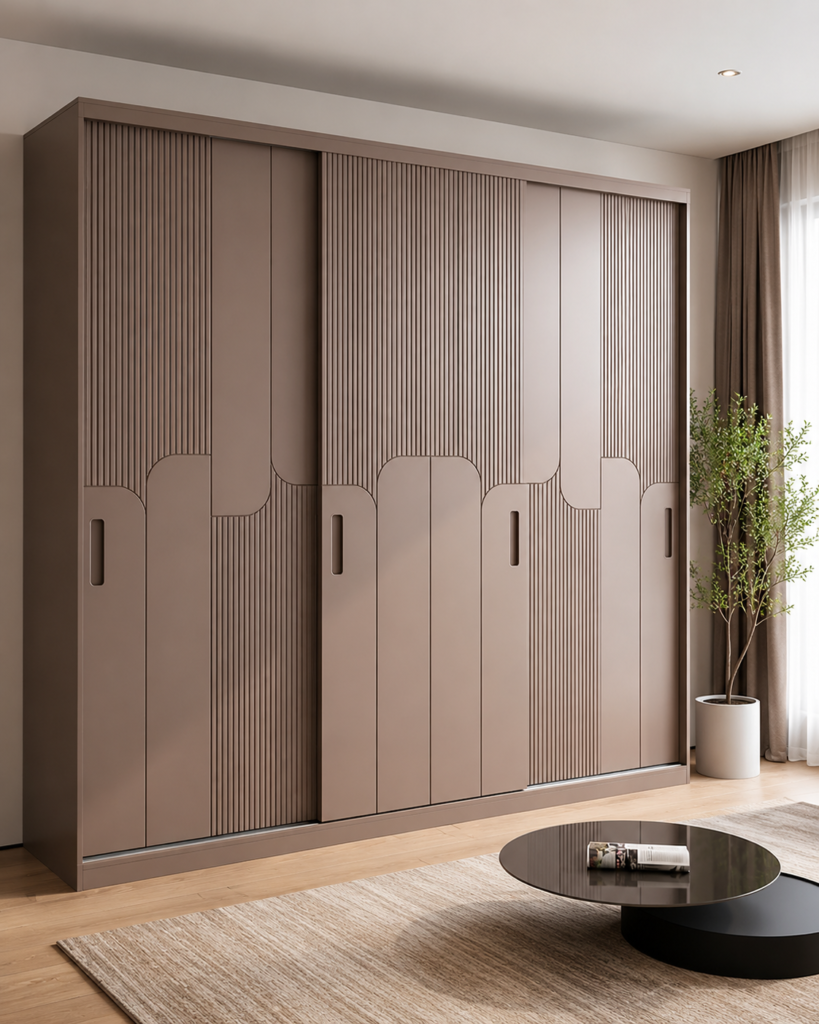
6. Cabinet & Wardrobe Shutters
Kitchen cabinets and wardrobes define the overall appearance of an interior. CNC machining allows manufacturers to create decorative shutter designs with perfect symmetry and clean edges.
Instead of plain cabinet doors, homeowners now prefer CNC-cut patterns that combine style with functionality.
Common CNC Designs
-
- Contemporary line patterns
-
- Floral designs
-
- Traditional carved-look panels
-
- Minimalist geometric patterns
-
- Customized designer shutters
Why MDF Works Well
-
- Smooth finishing
-
- Consistent thickness
-
- Easy lamination
-
- Paint-ready surface
-
- Affordable compared to hardwood
At Sourav CNC Works, cabinet manufacturers frequently request custom-cut MDF shutters because repeat production maintains identical dimensions across every project.
7. Temple (Pooja Unit) Designs
Decorative temple units remain one of the fastest-growing applications of MDF Jali Design.
CNC routers can produce intricate religious motifs that would otherwise require extensive manual carving.
Common Temple Components
-
- Back panels
-
- Side decorative jali
-
- Om symbols
-
- Floral borders
-
- Mandir doors
-
- Decorative arches
Why CNC Is Preferred
-
- Sharp detailing
-
- Uniform patterns
-
- Faster production
-
- Easy customization
-
- Better repeatability
Many homeowners choose painted or laminated MDF temple panels to achieve a premium appearance while keeping project costs under control.
8. Reception & Commercial Interior Panels
Commercial interiors require designs that leave a lasting first impression. CNC-cut MDF panels help create professional-looking reception areas without significantly increasing project costs.
Suitable Commercial Spaces
-
- Corporate offices
-
- Hospitals
-
- Hotels
-
- Restaurants
-
- Retail stores
-
- Salons
-
- Educational institutions
Common Installations
-
- Reception counters
-
- Brand feature walls
-
- Decorative partitions
-
- Display panels
-
- Logo backgrounds
A well-designed CNC feature wall can instantly improve the visual identity of a business while maintaining a clean and modern appearance.
9. Decorative Doors
Interior doors no longer have to remain plain.
Using MDF CNC Cutting, designers can create stylish decorative door panels with customized artwork.
Popular designs include:
-
- Floral carving patterns
-
- Geometric artwork
-
- Contemporary grooves
-
- Traditional Indian motifs
-
- Personalized custom designs
These doors are commonly installed in:
-
- Bedrooms
-
- Pooja rooms
-
- Offices
-
- Hotels
-
- Villas
-
- Luxury apartments
10. Customized Name Boards & Interior Signage
Beyond furniture and wall panels, MDF CNC Cutting is widely used for interior branding and decorative signage.
Applications include:
-
- Company logos
-
- Reception signs
-
- House name plates
-
- Room identification boards
-
- Direction signs
-
- Decorative quote boards
For painted indoor signage, MDF provides a smooth surface that delivers excellent finishing quality.
MDF vs Plywood vs Solid Wood
| Feature | MDF | Plywood | Solid Wood |
|---|---|---|---|
| CNC Cutting Quality | Excellent | Good | Good |
| Smooth Surface | Excellent | Moderate | Natural Grain |
| Intricate Designs | Excellent | Limited | Good |
| Painting Finish | Excellent | Good | Good |
| Moisture Resistance | Moderate | Better | Depends on Wood |
| Cost | Affordable | Medium | High |
| Decorative Panels | Excellent | Good | Premium |
Which Material Should You Choose?
Choose MDF if your project requires:
-
- Decorative wall panels
-
- CNC Jali Design
-
- Furniture shutters
-
- Interior partitions
-
- False ceilings
-
- Paint-finish interiors
Choose Plywood where higher moisture resistance is required.
Choose Solid Wood only when premium natural wood aesthetics justify the additional cost.
Factors That Affect MDF CNC Cutting Cost
Every CNC project is different. Pricing depends on several practical factors rather than a fixed rate.
Material Thickness
Thicker MDF sheets require longer cutting times and different tooling.
Design Complexity
Simple straight-line cuts are completed quickly, while intricate jali patterns increase machining time.
Sheet Size
Larger sheets require more material and longer production cycles.
Quantity
Bulk production generally reduces the cost per panel because machine setup time is distributed across more units.
Surface Finish
Painting, polishing, laminating, and edge finishing add to the final project cost.
Installation Requirements
Projects that include installation, transportation, or on-site fitting will have additional charges.
Expert Tips for Better MDF CNC Projects
Based on practical manufacturing experience, the following recommendations help achieve better results:
-
- Choose premium-quality MDF boards for decorative work.
-
- Finalize dimensions before CNC programming begins.
-
- Maintain consistent material thickness throughout the project.
-
- Apply primer before painting.
-
- Use moisture-resistant MDF where appropriate.
-
- Always approve a sample design before bulk production.
-
- Consider future maintenance while selecting intricate patterns.
Common Mistakes to Avoid
Many customers unknowingly make decisions that affect the final appearance of CNC-cut products.
Choosing Low-Quality MDF
Poor-quality boards often produce rough edges and inconsistent finishing.
Ignoring Moisture Conditions
Standard MDF should not be installed in continuously damp environments.
Overly Complex Designs
Very fine patterns may become fragile, especially in thinner panels.
Incorrect Measurements
Even small dimensional errors can delay installation and increase production costs.
Poor Surface Finishing
Skipping primer or using low-quality paint reduces the lifespan of decorative panels.
Quality Checkpoints Before Delivery
At Sourav CNC Works, every CNC-cut project should ideally be checked for:
-
- Accurate dimensions
-
- Smooth cutting edges
-
- Pattern consistency
-
- Surface defects
-
- Proper finishing
-
- Clean routing
-
- Safe packaging for transportation
Safety Considerations
Professional CNC manufacturing also involves safety measures that customers should understand.
-
- MDF dust should always be extracted using proper dust collection systems.
-
- Operators should wear appropriate protective equipment.
-
- Sharp edges should be inspected before installation.
-
- Panels must be transported carefully to prevent corner damage.
-
- Installations should use suitable hardware for secure fixing.
Frequently Asked Questions (FAQs)
1. What is MDF CNC Cutting?
MDF CNC Cutting is the process of using a Computer Numerical Control (CNC) router to cut Medium Density Fiberboard (MDF) into precise shapes, patterns, and designs. It is widely used for furniture manufacturing, decorative wall panels, partitions, and interior design projects.
2. Is MDF suitable for decorative interior work?
Yes. MDF is one of the best materials for decorative interior applications because it has a smooth surface, consistent density, and excellent machining properties. It also accepts paint, laminate, veneer, and PVC finishes very well.
3. Can MDF CNC panels be painted?
Absolutely. MDF is known for its excellent paint finish. Applying a quality primer before painting helps achieve a smooth, durable, and professional-looking surface.
4. What thickness of MDF is commonly used for CNC cutting?
The thickness depends on the application.
-
- 6 mm – Decorative wall art and lightweight panels
-
- 9 mm – Jali designs and wall décor
-
- 12 mm – Partitions and decorative panels
-
- 18 mm – Furniture, cabinets, and wardrobes
-
- 25 mm and above – Heavy-duty furniture and premium interior elements
5. Is MDF better than plywood for CNC cutting?
For intricate decorative designs, MDF generally performs better because of its uniform density and smooth edges. For moisture-prone areas, moisture-resistant plywood may be a better choice.
6. Can MDF CNC Cutting be customized?
Yes. One of the biggest advantages of CNC machining is complete customization. Designs, dimensions, patterns, logos, and decorative elements can all be tailored to meet project requirements.
7. How long does MDF CNC Cutting take?
Production time depends on:
-
- Design complexity
-
- Quantity
-
- Sheet thickness
-
- Surface finishing
-
- Project size
Simple projects may be completed quickly, while intricate custom designs require additional machining and finishing time.
8. Where is MDF CNC Cutting commonly used?
It is widely used in:
-
- Homes
-
- Offices
-
- Hotels
-
- Restaurants
-
- Shopping malls
-
- Retail stores
-
- Educational institutions
-
- Hospitals
-
- Showrooms
9. How do I maintain MDF CNC panels?
To maximize their lifespan:
-
- Clean with a soft, dry or slightly damp cloth.
-
- Avoid prolonged exposure to water.
-
- Use mild cleaning solutions instead of harsh chemicals.
-
- Repair paint chips promptly to protect the surface.
-
- Keep panels away from direct moisture and excessive humidity.
10. Why choose Sourav CNC Works for MDF CNC Cutting?
At Sourav CNC Works, we focus on precision CNC machining, custom designs, and consistent quality. Whether you need decorative MDF jali panels, furniture components, wall panels, partitions, or interior CNC work, we manufacture solutions tailored to your design and project requirements.
Want to learn more about MDF boards and their role in modern interior design? Understanding the properties, benefits, and applications of MDF can help you choose the right material for your next project. You can explore this detailed guide by Greenply to gain more insights into MDF board uses in home and commercial interiors.
Conclusion
MDF CNC Cutting has become an essential part of modern interior design, offering the precision, flexibility, and consistency needed to create high-quality decorative panels, partitions, furniture components, false ceilings, and commercial interiors. Its smooth finish, affordability, and compatibility with various surface treatments make it a preferred material for architects, interior designers, and furniture manufacturers.
Choosing the right material, finalizing accurate dimensions, and working with experienced CNC professionals are key to achieving long-lasting and visually appealing results. Careful planning, quality materials, and precision machining help reduce material waste, simplify installation, and deliver a polished finish that enhances any interior space.
At Sourav CNC Works, we provide customized MDF CNC Cutting, MDF Jali Design, and Interior CNC Work solutions tailored to residential, commercial, and industrial requirements. Our focus is on precision, craftsmanship, and dependable manufacturing, ensuring every project meets the design intent and quality expectations of our clients.