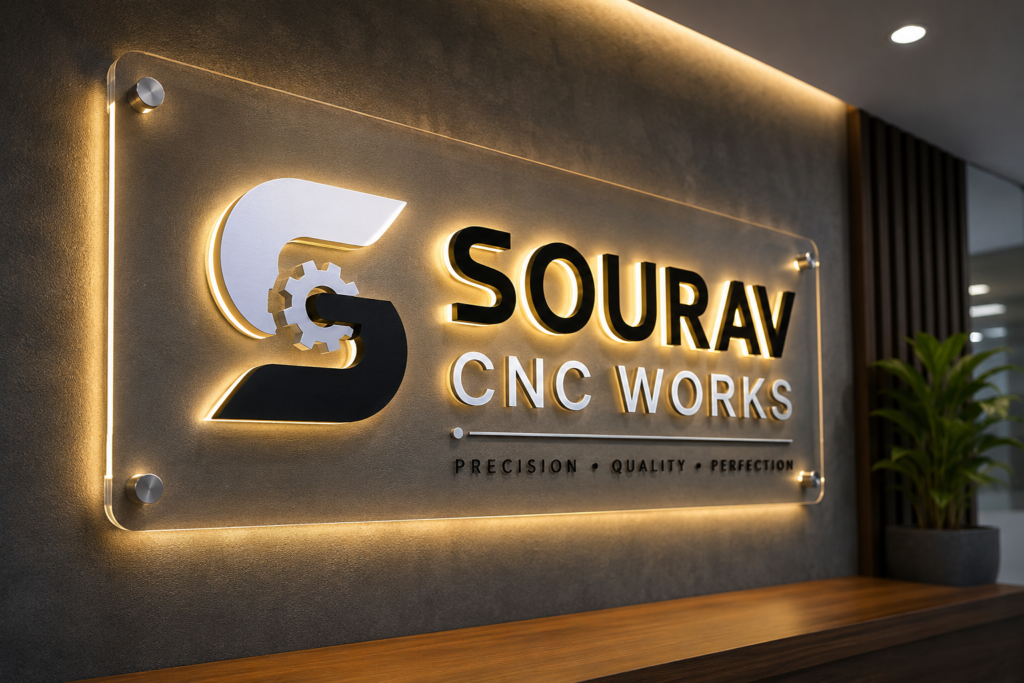
A sign board is often the first thing customers notice about a business. Whether it’s mounted outside a retail store, displayed in an office reception, or installed in a shopping mall, a well-crafted sign creates a strong first impression. Modern businesses want signage that looks professional, lasts for years, and reflects their brand identity. Acrylic has become one of the most popular materials for achieving these goals.
Acrylic laser cutting combines precision manufacturing with attractive finishes, making it an ideal choice for custom sign boards. The technology produces clean edges, intricate designs, and consistent quality that are difficult to achieve with traditional cutting methods. From illuminated logo signs to elegant office name plates, laser-cut acrylic is widely used across commercial and residential projects.
At Sourav CNC Works, we work with acrylic cutting and CNC fabrication for a wide range of signage and decorative applications. Based on practical manufacturing experience, the right material thickness, cutting accuracy, and finishing techniques all contribute to the durability and appearance of the final product. Understanding these factors helps customers choose signage that performs well both indoors and outdoors.
In this guide, we’ll explain why acrylic laser cutting has become the preferred solution for modern sign boards, compare it with other materials, discuss cost factors, and share practical recommendations for selecting the right acrylic signage for your project.
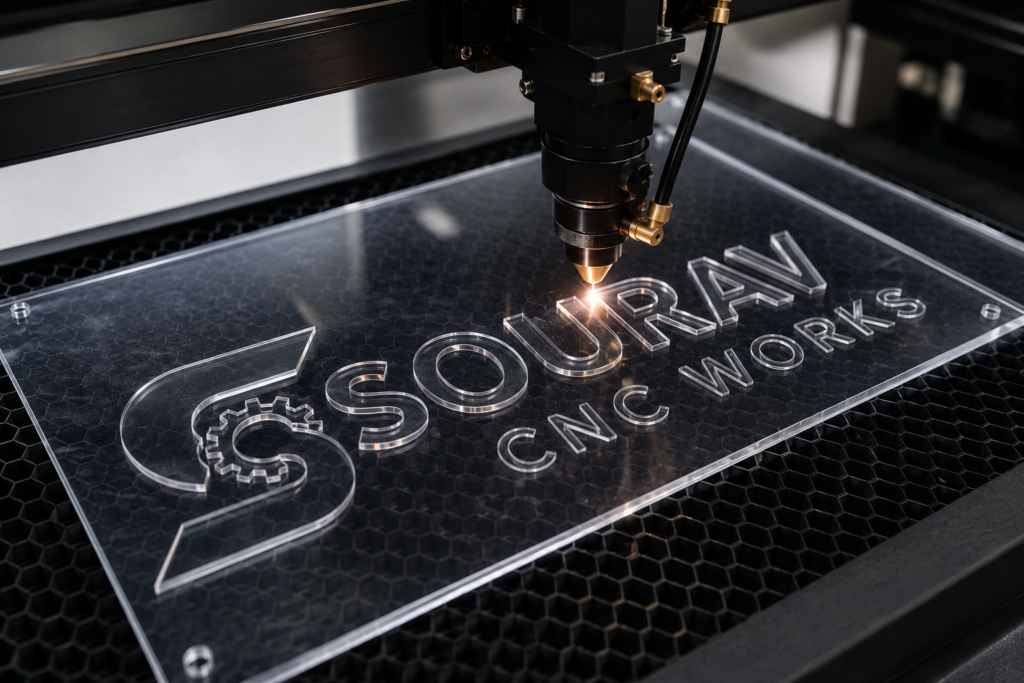
What Is Acrylic Laser Cutting?
Acrylic laser cutting is a manufacturing process that uses a focused laser beam to cut acrylic sheets with exceptional precision. The laser melts and vaporizes the material along the programmed cutting path, creating smooth, polished edges without requiring extensive finishing.
Unlike manual cutting methods, laser cutting follows digital design files, ensuring every piece matches the original design accurately. This makes it especially valuable for custom logos, decorative lettering, intricate patterns, and branding elements.
Common acrylic sheet thicknesses include:
| Thickness | Typical Applications |
|---|---|
| 2 mm | Labels, display inserts |
| 3 mm | Office signs, name plates |
| 5 mm | Wall branding, reception logos |
| 8–10 mm | Premium signage |
| 12 mm+ | Luxury architectural signs |
Why Acrylic Is a Preferred Material for Modern Sign Boards
Businesses increasingly choose acrylic because it offers a balance of aesthetics, durability, and versatility.
Some of its key advantages include:
- Crystal-clear finish similar to glass
- Lightweight construction
- High impact resistance
- Excellent weather resistance
- Easy customization
- Compatibility with LED lighting
- Suitable for indoor and outdoor installations
- Available in clear, colored, frosted, and opaque finishes
These qualities make acrylic suitable for retail branding, hospitality, healthcare facilities, educational institutions, corporate offices, and residential interiors.
Benefits of Acrylic Laser Cutting
1. Exceptional Precision
Laser cutting delivers highly accurate shapes and sharp details. This is particularly useful for logos, small text, and decorative elements where clean edges enhance the overall appearance.
Even intricate fonts and complex artwork can be reproduced consistently, reducing material waste and improving production efficiency.
2. Smooth, Professional Finish
One noticeable advantage of laser-cut acrylic is the polished edge produced during cutting. Unlike mechanical cutting, which may require additional sanding or polishing, laser cutting often leaves edges ready for installation.
This premium finish is especially valuable for:
- Reception signs
- Corporate logos
- Luxury retail displays
- Exhibition branding
3. Wide Design Flexibility
Modern signage rarely follows a standard shape. Businesses often require unique branding elements that reflect their identity.
Laser cutting allows designers to create:
- Custom typography
- Decorative borders
- Company logos
- Directional signs
- Wall-mounted lettering
- Geometric patterns
- Layered signage
Since designs are controlled digitally, modifications can be made efficiently without changing physical cutting tools.
4. Excellent Compatibility with LED Lighting
Many modern businesses prefer illuminated signs because they improve visibility during evening hours and create a premium visual effect.
Laser-cut acrylic works exceptionally well with:
- LED backlit signs
- Edge-lit acrylic panels
- Halo-lit letters
- Reception branding
- Retail storefront displays
The material distributes light evenly, creating clean illumination without distracting shadows.
5. Durability for Long-Term Use
Quality acrylic offers good resistance to moisture, UV exposure, and general wear when paired with appropriate installation and maintenance practices.
Compared with painted wooden signs, acrylic generally requires less maintenance and retains its appearance for longer periods, making it a practical choice for many commercial applications.
6. Fast Production with Consistent Results
Because laser cutting uses computer-controlled designs, identical sign boards can be produced repeatedly with high consistency.
This is especially beneficial for businesses that need:
- Multiple store locations
- Franchise branding
- Office name plates
- Directional signage
- Bulk promotional displays
Standardized production helps maintain a uniform brand appearance across different installations.
Types of Acrylic Sign Boards
Acrylic is one of the most versatile materials used in signage because it can be customized into various styles and finishes. Choosing the right type depends on the installation location, lighting requirements, and brand identity.
1. Clear Acrylic Sign Boards
Clear acrylic provides a clean, glass-like appearance while being lighter and more impact-resistant than glass. It is commonly used in:
- Corporate offices
- Reception areas
- Hospitals
- Educational institutions
- Premium retail stores
The transparent finish gives a modern and minimalist look that complements contemporary interiors.
2. Frosted Acrylic Signs
Frosted acrylic diffuses light and reduces glare, creating a sophisticated appearance. It is popular for:
- Office directories
- Conference room signs
- Privacy panels
- Interior branding
Frosted finishes also help hide fingerprints and minor surface scratches.
3. Colored Acrylic Sign Boards
Colored acrylic sheets are available in a wide range of shades, allowing businesses to align signage with their brand identity without relying solely on paint.
They are widely used for:
- Shop branding
- Restaurant signage
- Retail displays
- Promotional boards
4. LED Acrylic Sign Boards
Laser-cut acrylic works exceptionally well with LED lighting. Whether edge-lit or backlit, acrylic distributes light evenly for a professional finish.
Typical applications include:
- Reception logos
- Retail storefronts
- Hotel branding
- Salon signs
- Cafés
- Showrooms
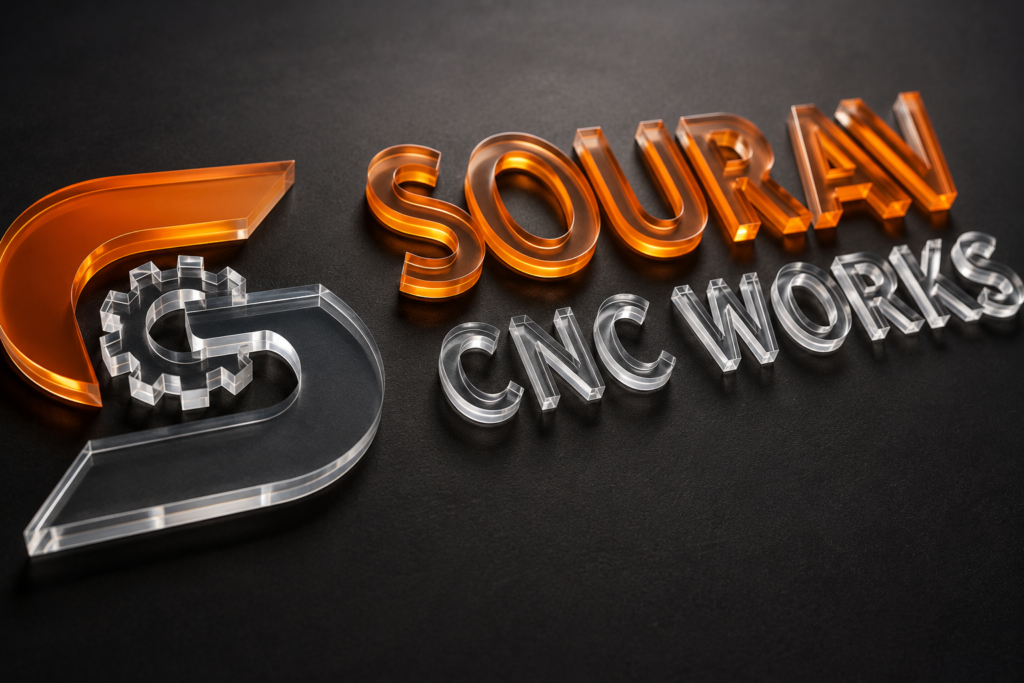
5. 3D Acrylic Letter Signs
Three-dimensional acrylic letters create depth and improve visibility. They are frequently installed in:
- Office entrances
- Shopping malls
- Commercial buildings
- Exhibition stalls
- Corporate branding walls
These signs can be mounted directly or paired with metal, ACP, or wooden back panels for added visual impact.
CNC Acrylic Design vs Traditional Fabrication
Although traditional fabrication methods still have their place, CNC and laser technologies have significantly improved the quality and consistency of acrylic signage.
| Feature | CNC/Laser Acrylic Design | Traditional Cutting |
|---|---|---|
| Precision | Excellent | Moderate |
| Edge Finish | Smooth & polished | Often requires finishing |
| Complex Designs | Easily achievable | Limited |
| Repeatability | Very high | Depends on craftsmanship |
| Material Waste | Lower | Higher |
| Production Speed | Faster | Slower |
| Accuracy | Computer-controlled | Manual variations |
For businesses requiring consistent branding across multiple locations, CNC acrylic design offers a clear advantage.
Acrylic vs Other Sign Board Materials
Selecting the right material depends on the environment, budget, and design goals.
| Material | Appearance | Weather Resistance | Best For |
|---|---|---|---|
| Acrylic | Premium | Excellent | Business signage |
| MDF | Decorative | Indoor only | Interior décor |
| PVC | Good | Good | Budget signage |
| ACP | Professional | Excellent | Outdoor branding |
| Wood | Natural | Moderate | Rustic interiors |
Each material serves a different purpose, but acrylic stands out for its polished appearance, versatility, and compatibility with modern branding.
Where Acrylic Sign Boards Are Commonly Used
Laser-cut acrylic signage is suitable for a wide variety of commercial and residential applications.
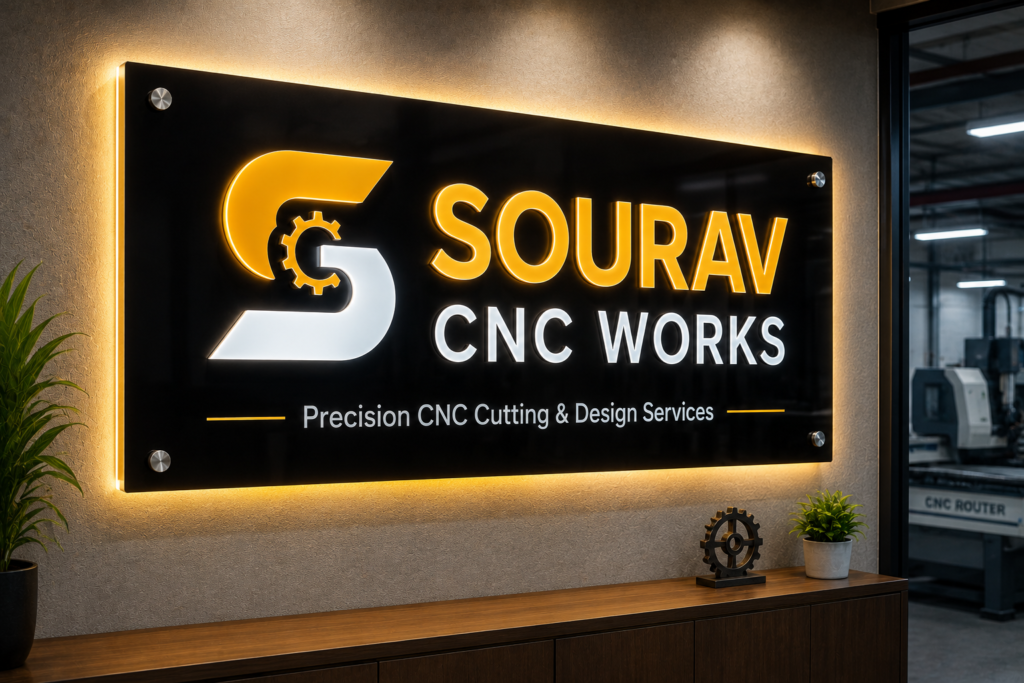
Retail Stores
- Storefront logos
- Promotional displays
- Product branding
- Window graphics
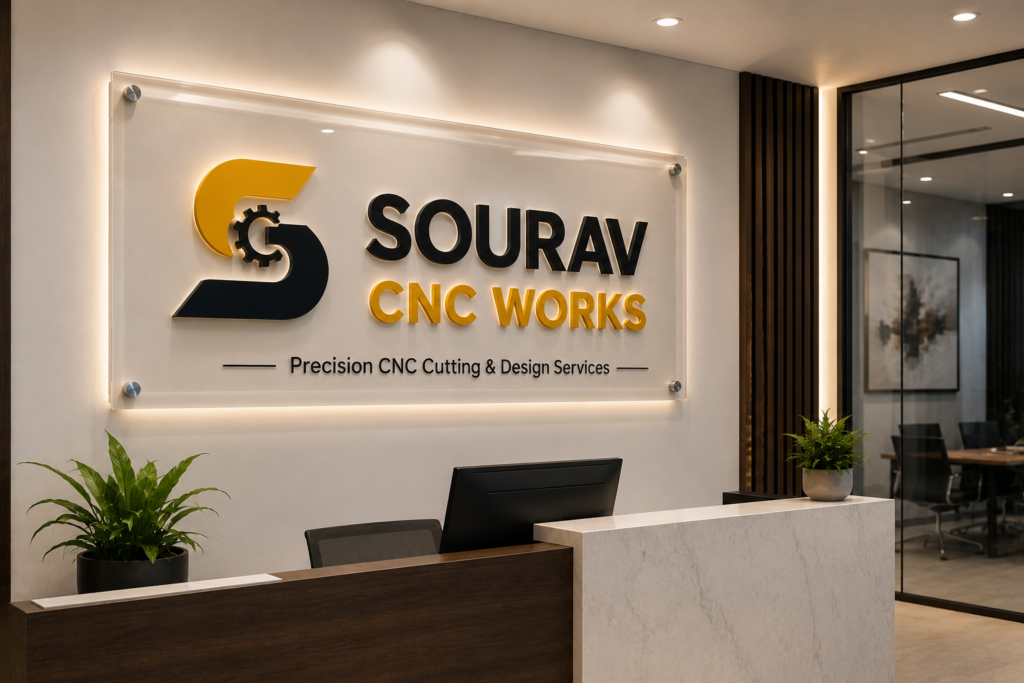
Corporate Offices
- Reception branding
- Meeting room signs
- Department directories
- Employee name plates
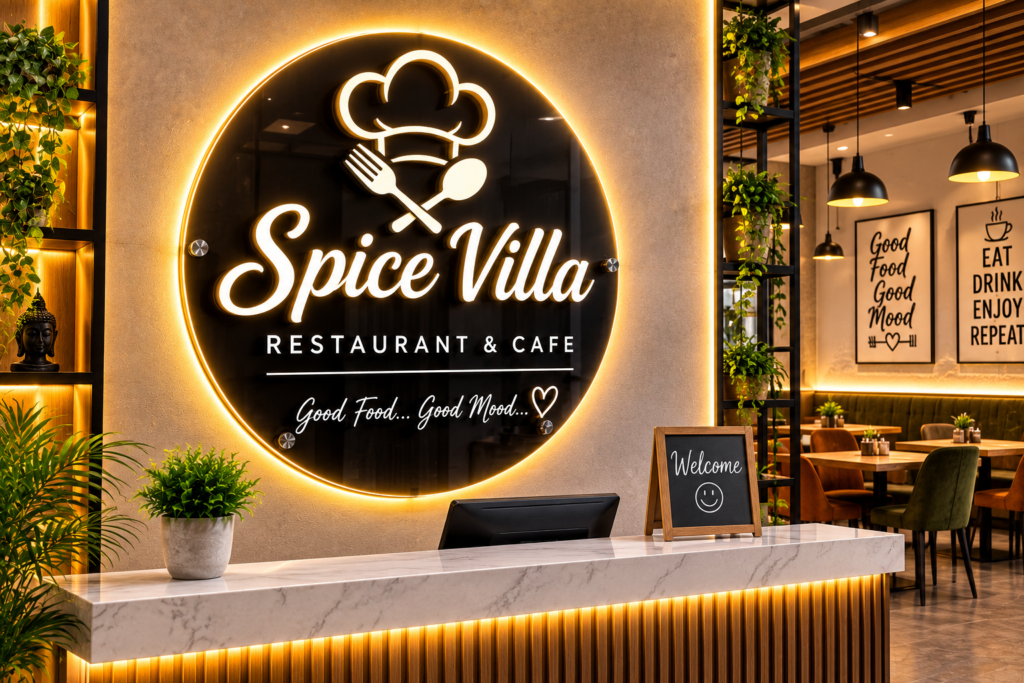
Restaurants & Cafés
- Menu boards
- Brand logos
- Decorative wall signs
- Counter branding
Hospitals
- Directional signage
- Room identification
- Safety information
- Department boards
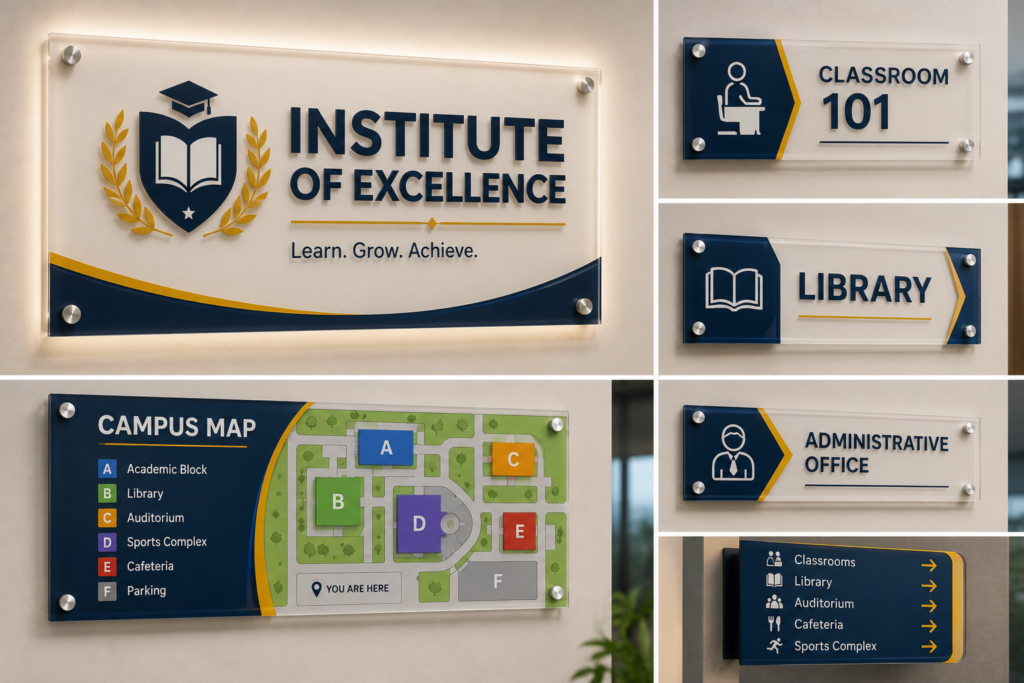
Educational Institutions
- Classroom signs
- Library signage
- Campus maps
- Administrative offices
Hotels
- Room numbers
- Lobby branding
- Wayfinding systems
- Decorative panels
Residential Interiors
- Custom name plates
- Decorative wall art
- House numbers
- Personalized décor
Factors That Influence Acrylic Cutting Costs
The cost of an acrylic sign board depends on several practical considerations rather than just the size of the board.
Material Thickness
Thicker sheets provide greater rigidity but require more material and longer cutting times.
Acrylic Grade
Cast acrylic generally offers superior engraving quality and edge finish, while extruded acrylic may be a more economical option for certain projects.
Design Complexity
Simple lettering is quicker to manufacture than intricate logos or decorative patterns with numerous cutouts.
Finishing Requirements
Additional processes such as polishing, painting, UV printing, or LED integration increase production time and overall cost.
Quantity
Bulk orders often reduce the per-unit production cost due to optimized material usage and machine setup.
Installation
Wall mounting, stand-offs, concealed fixings, and illuminated systems all influence installation costs.
Expert Tips for Choosing Acrylic Sign Boards
Drawing from practical fabrication experience, these recommendations can help you achieve better results:
- Choose the acrylic thickness based on the sign’s size and mounting method.
- Use UV-resistant acrylic for outdoor installations.
- Select high-quality LED components for illuminated signage.
- Keep artwork in vector format for maximum cutting accuracy.
- Maintain sufficient spacing between letters to improve readability.
- Consider matte or frosted finishes in high-touch indoor areas to reduce visible fingerprints.
- Work with experienced CNC professionals who understand material behavior and finishing techniques.
These small decisions often have a significant impact on the final appearance and durability of the sign.
Buying Guide: How to Select the Right Acrylic Sign Board
Before placing an order, consider the following questions:
- Will the sign be installed indoors or outdoors?
- Does it need illumination?
- What is the expected viewing distance?
- Which color best represents your brand?
- Is the sign intended for permanent or temporary use?
- Does the installation surface require stand-offs or direct mounting?
- Will the sign need future updates or replacements?
Discussing these details with your fabrication partner helps ensure the finished sign meets both functional and aesthetic requirements.
Maintenance Tips for Acrylic Sign Boards
Acrylic signs require minimal maintenance, but proper care helps preserve their appearance.
- Clean with a soft microfiber cloth.
- Use mild soap and water instead of harsh chemical cleaners.
- Avoid abrasive pads that may scratch the surface.
- Inspect mounting hardware periodically.
- Remove dust regularly from illuminated signs.
- Protect the surface during nearby construction or renovation work.
Routine maintenance keeps acrylic signage looking clean and professional for years.
Common Mistakes to Avoid
Many signage issues arise from avoidable planning errors.
- Choosing the wrong acrylic thickness.
- Using low-resolution artwork for cutting.
- Ignoring outdoor weather conditions.
- Selecting poor-quality LEDs.
- Overcrowding text and graphics.
- Choosing colors with insufficient contrast.
- Hiring inexperienced fabricators solely based on price.
Careful planning and quality manufacturing help avoid costly replacements later.
Frequently Asked Questions (FAQs)
1. Is acrylic better than glass for sign boards?
For most commercial signage, acrylic is a practical alternative to glass. It offers a similar premium appearance while being lighter, more impact-resistant, and easier to fabricate into custom shapes.
2. Can acrylic sign boards be used outdoors?
Yes. High-quality acrylic is suitable for outdoor use when paired with UV-resistant materials, proper mounting hardware, and weather-appropriate installation techniques.
3. What thickness of acrylic is best for sign boards?
The ideal thickness depends on the application:
- 3 mm: Name plates and small indoor signs
- 5 mm: Office branding and wall signs
- 8–10 mm: Premium business signage
- 10 mm and above: Large commercial and architectural installations
- 4. What is the difference between laser cutting and CNC routing for acrylic?
- Laser cutting produces exceptionally smooth, polished edges and is ideal for detailed lettering and intricate designs. CNC routing is better suited for thicker acrylic sheets, deep engraving, and certain fabrication requirements. The best method depends on the project’s design, material thickness, and finish requirements.
4. What is the difference between laser cutting and CNC routing for acrylic?
Laser cutting produces exceptionally smooth, polished edges and is ideal for detailed lettering and intricate designs. CNC routing is better suited for thicker acrylic sheets, deep engraving, and certain fabrication requirements. The best method depends on the project’s design, material thickness, and finish requirements.
5. Can acrylic signs include LED lighting?
Yes. Acrylic is one of the most popular materials for:
- LED backlit signs
- Edge-lit displays
- Halo-lit letters
- Illuminated reception logos
Its excellent light transmission helps create bright, uniform illumination.
6. How long do acrylic sign boards last?
With quality materials, proper fabrication, and routine maintenance, acrylic sign boards can maintain their appearance for many years in both indoor and suitable outdoor environments.
7. Are acrylic signs easy to maintain?
Yes. Cleaning with a microfiber cloth and mild soap solution is generally sufficient. Avoid abrasive cleaners and harsh chemicals that may damage the surface.
8. Can acrylic be customized into any shape?
Yes. Laser cutting and CNC machining allow acrylic to be fabricated into custom logos, letters, decorative patterns, directional signs, and unique branding elements with high precision.
9. Which industries commonly use acrylic signage?
Acrylic signage is widely used by:
- Retail stores
- Restaurants
- Hotels
- Hospitals
- Schools and colleges
- Corporate offices
- Shopping malls
- Salons and spas
- Real estate companies
- Exhibition organizers
10. Why choose professional acrylic cutting services?
Professional fabrication ensures accurate dimensions, clean edges, proper material selection, and a finish that enhances both the durability and appearance of the final sign.