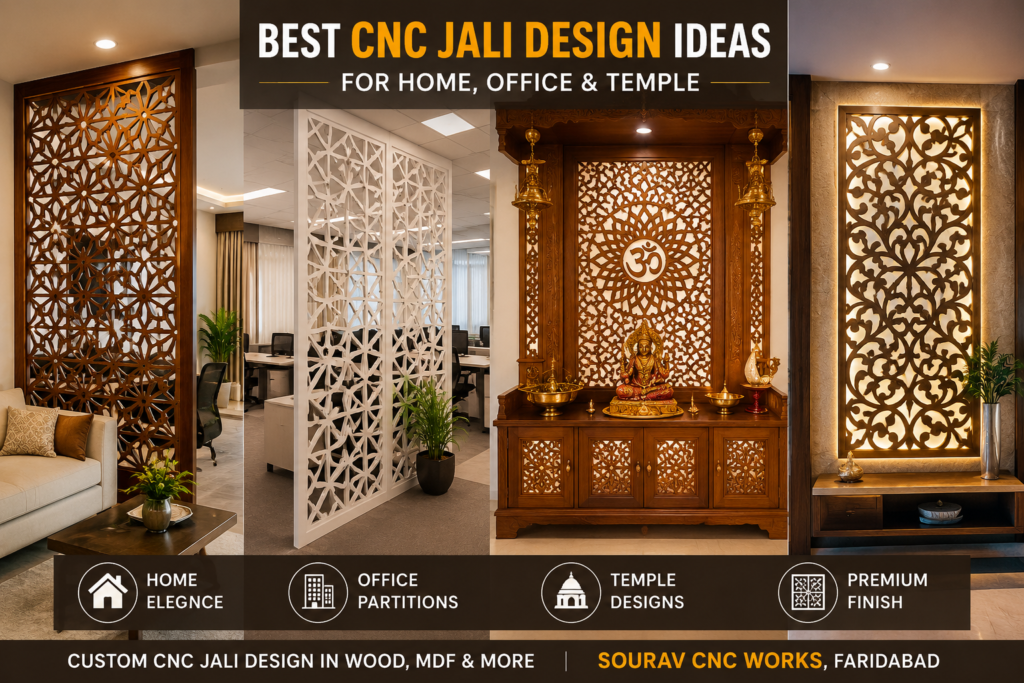
Decorative jali panels have been part of Indian architecture for centuries. Traditional stone carvings once dominated palaces and temples, while modern CNC technology now makes it possible to create intricate designs with remarkable precision on wood, MDF, PVC, acrylic, and ACP.
Today, CNC Jali Design is more than a decorative element. It improves privacy, enhances ventilation, adds visual depth, and transforms ordinary spaces into elegant interiors.
At Sourav CNC Works, we regularly work with homeowners, architects, furniture makers, and commercial clients in Faridabad to create custom CNC jali panels for residential and commercial projects. One common observation from these projects is that selecting the right material is just as important as selecting the design. A beautiful pattern cut on the wrong material may not deliver the desired durability or finish.
This guide explains the best jali design ideas, suitable materials, practical applications, and professional considerations before ordering custom CNC-cut panels.
What is CNC Jali Design?
CNC Jali Design refers to decorative patterns cut using Computer Numerical Control (CNC) routing machines. Unlike manual carving, CNC machines follow digital design files to produce highly accurate and repeatable patterns.
The process allows manufacturers to create:
- Geometric patterns
- Floral artwork
- Islamic patterns
- Traditional Indian motifs
- Contemporary abstract designs
- Customized logo panels
- Religious artwork
- Privacy screens
Because the machine follows programmed tool paths, every cut maintains consistent dimensions and clean edges, making CNC cutting suitable for both small decorative pieces and large architectural installations.
Why CNC Jali Designs Have Become So Popular
Interior design trends have shifted toward functional décor. Instead of solid partitions, designers often choose decorative screens that provide privacy while allowing natural light and airflow.
Some practical advantages include:
- Elegant appearance
- Better ventilation
- Partial privacy
- Easy customization
- Fast production
- Consistent cutting quality
- Suitable for residential and commercial projects
- Compatible with multiple materials
These advantages explain why CNC-cut jali panels are frequently used in modern apartments, villas, offices, restaurants, retail stores, hotels, and places of worship.
Best CNC Jali Design Ideas for Homes
Living Room Partitions
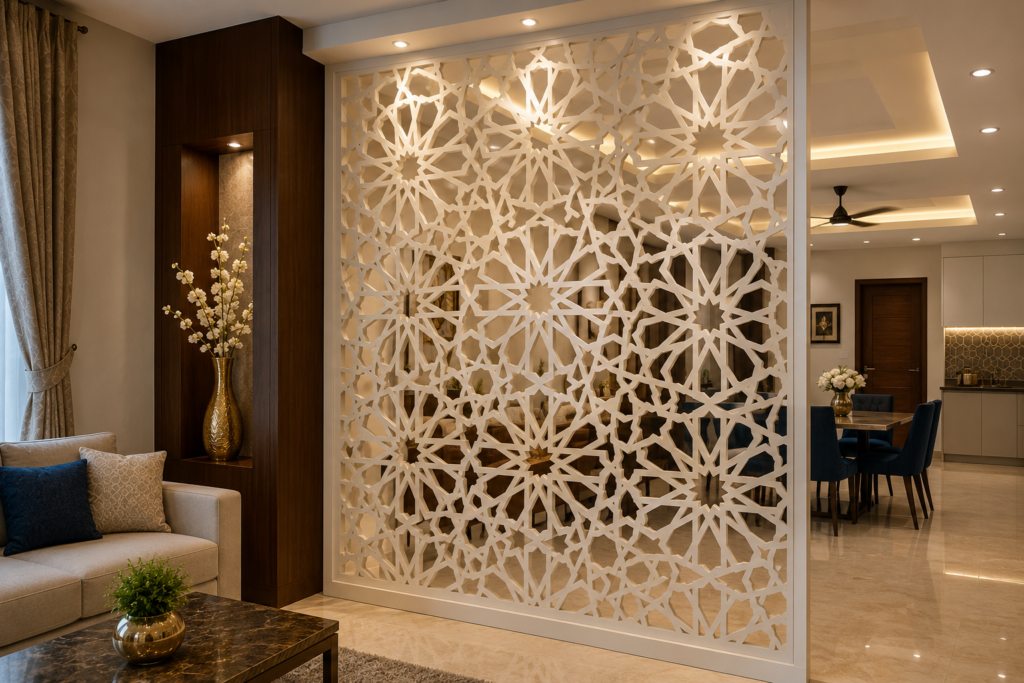
Large living spaces often require subtle separation between seating and dining areas. A decorative jali partition creates visual distinction without making the room feel enclosed.
Popular choices include:
- Geometric lattice
- Circular patterns
- Wooden floral panels
- Contemporary linear designs
Natural wood finishes work particularly well with modern and Scandinavian interiors, while painted MDF panels complement minimalist themes.
Staircase Decorative Panels
The area below or alongside staircases often remains underutilized. Installing CNC-cut jali panels can transform this space into a decorative architectural feature.
Designers commonly recommend:
- Vertical geometric patterns
- Minimalist straight-line cuts
- Contemporary wave designs
- Abstract decorative panels
Bedroom Privacy Screens
Bedrooms sometimes require separation between dressing areas and sleeping spaces. Instead of constructing permanent walls, decorative jali partitions offer flexibility while maintaining an open atmosphere.
Suitable materials include:
- MDF
- Wooden panels
- PVC
- Acrylic (for modern interiors)
Balcony Decorative Screens
Outdoor balconies require materials that can tolerate changing weather conditions.
For balconies, many professionals prefer:
- ACP
- Exterior-grade PVC
- Treated hardwood
These materials generally perform better outdoors than standard MDF.
TV Background Panels
Feature walls have become a popular interior trend. CNC-cut decorative panels behind televisions create texture without overwhelming the room.
Common styles include:
- Modern geometric grids
- Minimal floral patterns
- Hexagonal patterns
- Abstract wave designs
LED backlighting further enhances the depth of CNC-cut panels.
CNC Jali Design Ideas for Offices
Commercial interiors require a balance between professionalism and aesthetics.
Decorative jali panels are frequently used for:
Reception Background
Reception areas create the first impression for visitors.
Customized CNC panels featuring:
- Company logos
- Brand patterns
- Geometric artwork
- Corporate themes
help establish a polished appearance.
Cabin Partitions
Instead of opaque partitions, CNC jali screens provide:
- Visual openness
- Privacy
- Better lighting
- Improved aesthetics
This approach is especially suitable for creative offices, studios, and coworking spaces.
Conference Room Dividers
Large offices often require flexible partitions.
Decorative MDF or wooden jali panels help define meeting spaces while maintaining an open office layout.
Temple CNC Jali Design Ideas
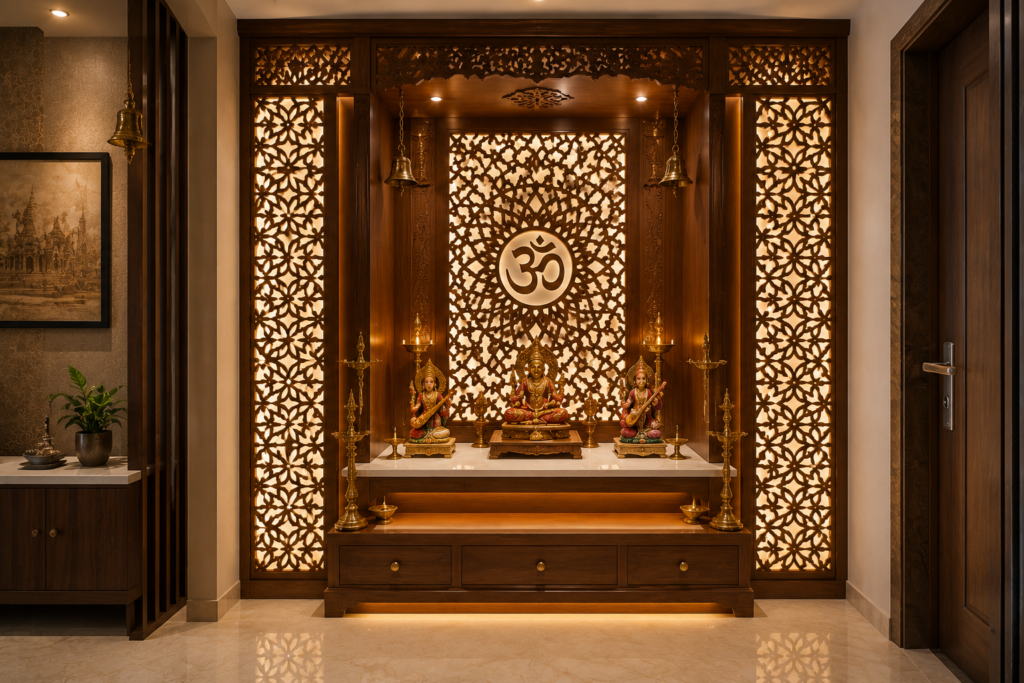
Temple interiors require a different design approach compared to residential or commercial spaces. The focus is on symmetry, craftsmanship, and traditional motifs.
Popular CNC temple designs include:
- Lotus carvings
- Om symbols
- Bell motifs
- Floral borders
- Mandala artwork
- Traditional Indian lattice
- Temple arch patterns
Many homeowners in Faridabad also choose CNC-cut jali panels for home pooja rooms to create a dedicated prayer space without constructing permanent walls.
Wooden Jali vs MDF Jali
| Feature | Wooden Jali | MDF Jali |
|---|---|---|
| Appearance | Premium natural grain | Smooth painted finish |
| Strength | High | Moderate |
| Customization | Excellent | Excellent |
| Moisture Resistance | Better (depending on wood species) | Lower unless moisture-resistant MDF is used |
| Painting | Optional | Excellent |
| Cost | Higher | More economical |
| Best Use | Premium interiors | Decorative indoor applications |
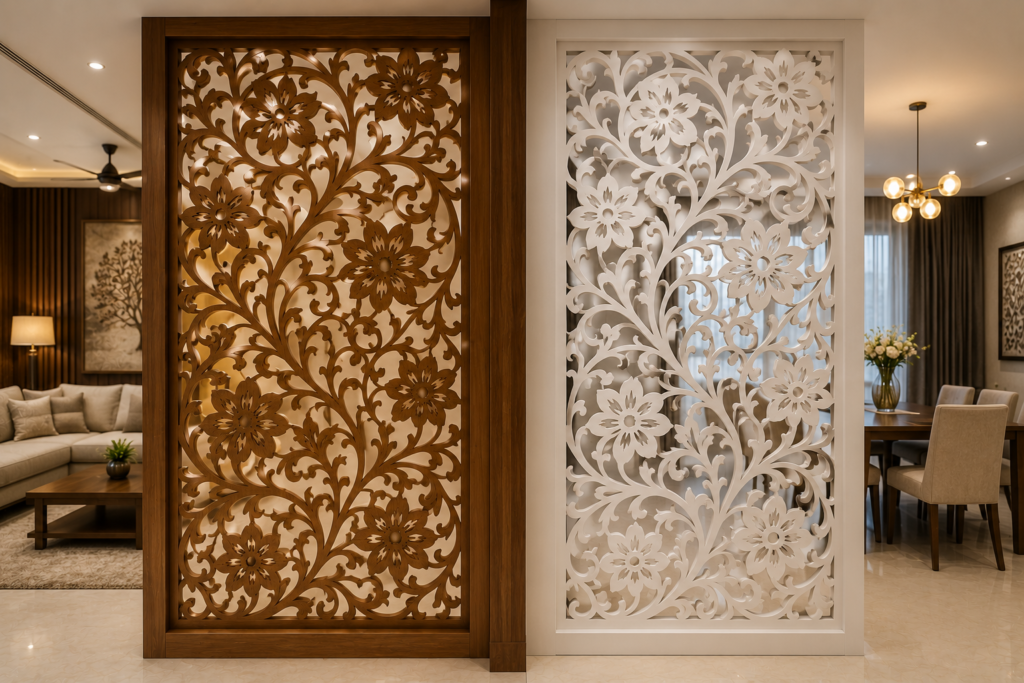
How to Choose the Right Material for CNC Jali Design
Selecting the right material is one of the most important decisions before starting a CNC jali project. The design may look attractive on screen, but the final result depends on where the panel will be installed, the expected lifespan, and the desired finish.
MDF Jali
MDF (Medium Density Fiberboard) is a popular choice for indoor decorative applications because of its smooth surface and excellent paint finish.
Best suited for:
- Living room partitions
- Bedroom panels
- Wall décor
- Ceiling designs
- TV unit backgrounds
- Pooja room partitions
Advantages
- Smooth surface for paint and PU finish
- Cost-effective
- Supports intricate CNC cutting
- Ideal for indoor use
Consideration: Standard MDF is not recommended for areas exposed to moisture. For kitchens or humid spaces, moisture-resistant MDF is a better option.
Wooden Jali
Natural wood offers a premium look that cannot be fully replicated by engineered boards. The visible grain and texture give each panel a unique appearance.
Best suited for:
- Luxury homes
- Villas
- Premium office interiors
- Hotel lobbies
- Designer furniture
- Traditional temples
Advantages
- Strong and durable
- Elegant natural finish
- Can be polished or stained
- Long service life with proper maintenance
Consideration: Wood expands and contracts slightly with seasonal humidity. Proper seasoning and finishing help minimize movement.
PVC Jali
PVC is lightweight and moisture-resistant, making it suitable for humid environments.
Recommended for:
- Bathrooms
- Kitchens
- Utility areas
- Moisture-prone interiors
Acrylic Jali
Acrylic panels create a modern appearance and work especially well when combined with LED lighting.
Common applications include:
- Reception areas
- Brand displays
- Retail interiors
- Decorative wall panels
ACP Jali
ACP (Aluminium Composite Panel) is widely used for exterior applications because it offers good weather resistance and a contemporary finish.
Suitable for:
- Building façades
- Exterior partitions
- Commercial signage
- Outdoor decorative screens
Practical Design Tips from Industry Experience
From working on custom CNC cutting projects, a few practices consistently deliver better results:
Match the Pattern to the Space
Highly intricate designs may look impressive in large areas but can feel visually crowded in smaller rooms. Simpler geometric patterns often create a cleaner, more balanced look in compact spaces.
Consider Lighting Early
Backlit CNC jali panels produce striking visual effects. If LED lighting is part of the design, plan wiring and access before installation.
Think About Cleaning
Very fine cut-outs can collect dust more quickly than larger patterns. In homes that require easy maintenance, medium-density patterns are often a practical choice.
Balance Privacy and Openness
For office cabins or room dividers, choose designs that provide enough visual privacy without blocking airflow or natural light.
Coordinate with Interior Finishes
The panel should complement flooring, furniture, wall colors, and ceiling treatments rather than compete with them.
Quality Checkpoints Before Ordering a CNC Jali
Before approving production, confirm the following:
- Design file has been reviewed.
- Panel dimensions are accurate.
- Material thickness suits the application.
- Cut edges will receive the required finishing.
- Installation method is finalized.
- Paint or polish specifications are clear.
- Moisture resistance is considered where necessary.
- Transportation and handling have been planned for large panels.
A reliable CNC workshop will discuss these details before machining begins, reducing the risk of costly changes later.
Common Mistakes to Avoid
Many issues arise not from the CNC cutting itself but from planning decisions.
Choosing Material Based Only on Price
A lower-cost material may not perform well in every environment. Outdoor installations, for example, require weather-resistant materials.
Ignoring Panel Thickness
Thin panels with intricate patterns can become fragile. The design complexity should match the material thickness.
Selecting Overly Complex Designs
Extremely detailed patterns may be difficult to clean and may not suit minimalist interiors.
Skipping Surface Finish Planning
Paint, laminate, veneer, PU coating, or natural polish should be decided before production to ensure compatibility with the material.
Incorrect Measurements
Even a small measurement error can affect installation. Site verification before manufacturing is a standard best practice.
Cost Factors for CNC Jali Design in Faridabad
The cost of a CNC jali panel depends on several variables rather than a fixed price.
Key factors include:
| Factor | Impact on Cost |
|---|---|
| Material type | Higher-grade materials generally cost more |
| Panel thickness | Thicker boards require more material |
| Design complexity | Intricate patterns increase machining time |
| Panel size | Larger panels require more material and machining |
| Surface finish | Paint, polish, veneer, or laminate affect pricing |
| Quantity | Bulk orders often reduce the per-piece cost |
| Installation | Additional framing or fitting increases overall cost |
For an accurate quotation, provide dimensions, preferred material, and a reference design.
Maintenance Tips
Proper care helps decorative panels retain their appearance for years.
MDF Panels
- Dust regularly with a soft cloth.
- Avoid prolonged moisture exposure.
- Clean with a lightly damp microfiber cloth.
Wooden Jali
- Reapply polish or protective coating when needed.
- Protect from excessive water.
- Use wood-safe cleaning products.
Acrylic Panels
- Clean using a soft microfiber cloth.
- Avoid abrasive cleaners that may scratch the surface.
ACP Panels
- Wash occasionally with mild detergent.
- Remove dirt buildup to maintain appearance.
Why Choose Sourav CNC Works?
For custom CNC cutting projects, experience goes beyond operating a machine. It includes understanding material behavior, selecting suitable cutting parameters, reviewing designs for manufacturability, and maintaining quality throughout production.
Sourav CNC Works provides CNC cutting solutions for clients in Faridabad across a range of applications, including:
- CNC Cutting
- MDF Cutting
- PVC Cutting
- Acrylic Cutting
- ACP Cutting
- Wood Cutting
- CNC Jali Design
- Decorative Panels
- 3D Letter Signage
- Custom Name Plates
- Interior CNC Design
Each project is approached with attention to design accuracy, material suitability, and clean finishing to help achieve reliable results.
Frequently Asked Questions
1. Which material is best for CNC jali design?
It depends on the application. MDF is widely used indoors, while natural wood offers a premium finish. ACP and PVC are better suited for moisture-prone or outdoor areas.
2. Is MDF jali durable?
Yes. MDF jali performs well in indoor environments when protected from excessive moisture.
3. Can CNC jali be customized?
Yes. Designs can be customized based on dimensions, patterns, logos, architectural themes, or specific project requirements.
4. Which is better: Wooden Jali or MDF Jali?
Wooden jali offers greater durability and a natural appearance, while MDF is more economical and provides an excellent painted finish.
5. Can CNC jali be used as a room divider?
Yes. Decorative partitions are one of the most common residential and commercial applications.
6. Is CNC jali suitable for temples?
Yes. CNC-cut panels are widely used for home temples and larger religious spaces featuring traditional motifs such as lotus patterns and sacred symbols.
7. How long does CNC cutting take?
Production time depends on the design complexity, material, quantity, and finishing requirements.
8. Can LED lights be added behind CNC jali?
Yes. Backlit panels are commonly used to create decorative feature walls and premium interior designs.
9. What thickness is ideal for MDF jali?
The suitable thickness depends on the panel size, design, and installation method. Your CNC fabricator can recommend the appropriate option.
10. Do CNC jali panels require maintenance?
Routine dusting and occasional cleaning are generally sufficient. Wood panels may require periodic refinishing depending on use.