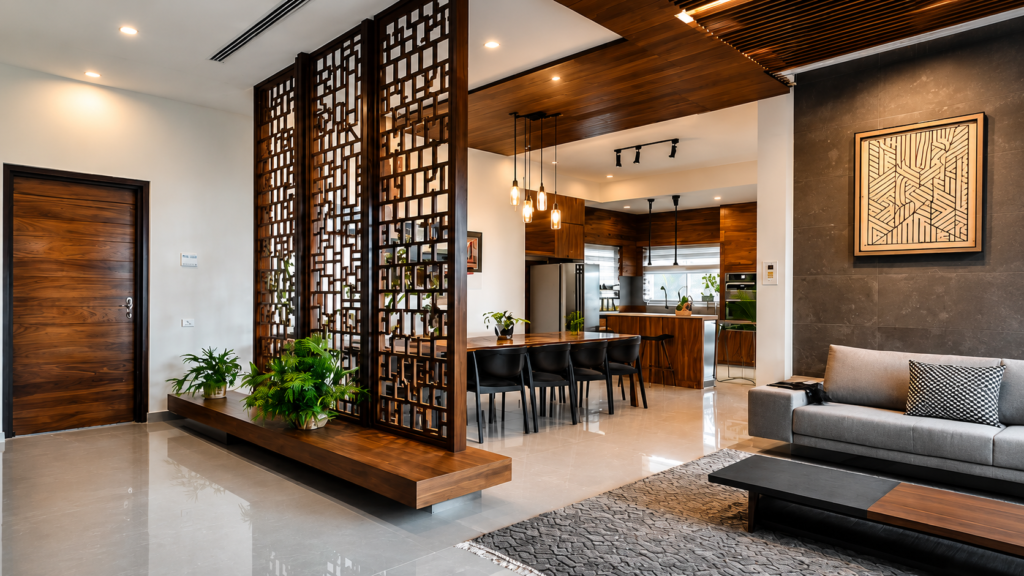
Custom interiors and architectural elements have become a defining feature of modern residential and commercial spaces. Instead of relying on mass-produced designs, homeowners, architects, and business owners increasingly prefer customized solutions that reflect their style, brand identity, and functional requirements.
This shift has made Custom CNC Design one of the most valuable technologies in interior decoration, signage, furniture manufacturing, and architectural detailing. Computer Numerical Control (CNC) machines enable highly accurate cutting, engraving, and shaping of materials such as MDF, wood, acrylic, PVC, and ACP. The result is consistent quality, intricate detailing, and faster production compared to traditional manual methods.
At Sourav CNC Works, we have worked with a wide range of residential and commercial projects where custom CNC solutions transformed ordinary spaces into distinctive environments. While every project has unique requirements, one thing remains consistent—precision manufacturing delivers better aesthetics, improved functionality, and long-term value.
What Is Custom CNC Design?
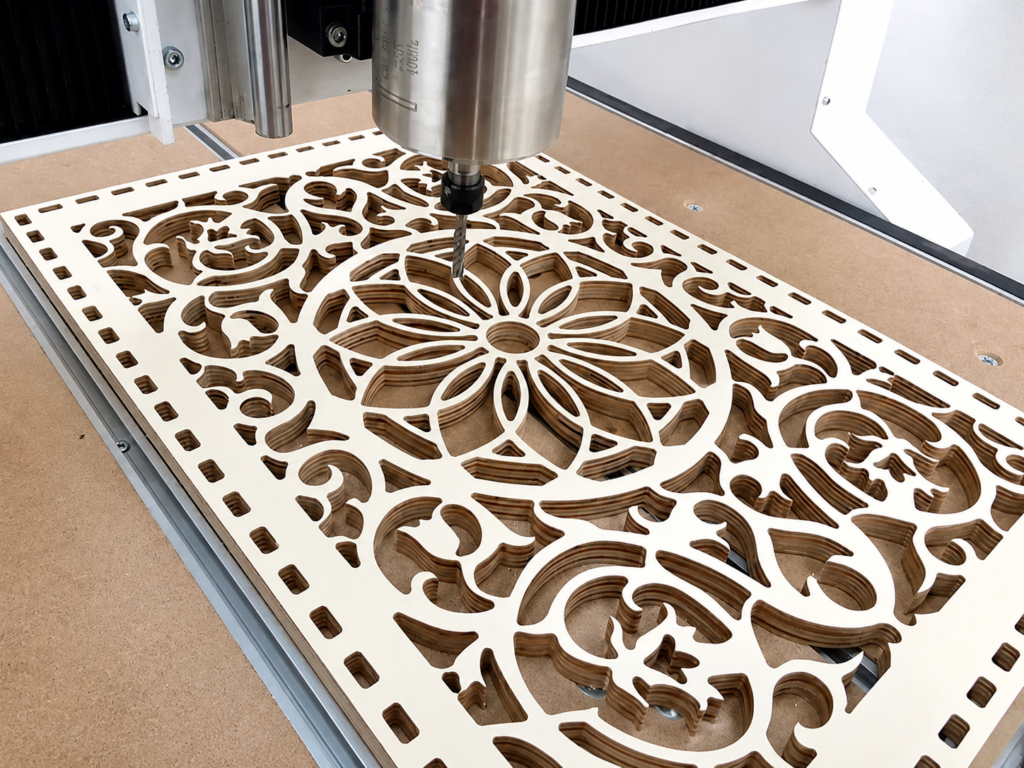
Custom CNC Design refers to creating unique patterns, shapes, furniture components, decorative panels, signage, or architectural elements using computer-controlled cutting machines.
Unlike manual fabrication, CNC machines follow digital design files with exceptional precision. This allows manufacturers to reproduce even highly detailed patterns accurately while minimizing material waste.
Common materials include:
- MDF
- Plywood
- Solid wood
- Acrylic sheets
- PVC boards
- ACP sheets
- HDF panels
Because every design begins with a digital drawing, modifications are easy before production starts. This flexibility makes CNC technology suitable for one-off custom pieces as well as large production runs.
Why Custom CNC Designs Are Becoming More Popular
Modern construction and interior design focus on personalization. People want interiors that match their preferences instead of generic products available everywhere.
Businesses also use customized designs to strengthen branding and improve customer experience. Restaurants, offices, retail stores, hotels, and showrooms often incorporate decorative CNC panels, custom signage, branded partitions, and feature walls to create memorable spaces.
Several practical factors contribute to the growing demand:
- Better design flexibility
- Consistent production quality
- Reduced manual errors
- Faster manufacturing
- Complex patterns with high accuracy
- Suitable for multiple materials
- Easy repeat production
These advantages make CNC technology valuable across industries.
Major Benefits of Custom CNC Designs
Unlimited Design Flexibility
One of the biggest advantages of CNC machining is the freedom to create virtually any design.
Traditional cutting methods often limit intricate detailing because everything depends on manual craftsmanship. CNC technology removes many of these limitations.
Custom CNC designs can include:
- Geometric patterns
- Floral motifs
- Islamic Jali patterns
- Modern minimalist designs
- Corporate branding elements
- Artistic wall panels
- Decorative room dividers
- Customized furniture components
Even highly detailed artwork can be reproduced accurately.
Exceptional Precision
Precision is one of the strongest reasons architects and interior designers choose CNC solutions.
Measurements are controlled digitally, reducing the possibility of human error.
Benefits include:
- Accurate dimensions
- Smooth edges
- Consistent panel sizes
- Better alignment during installation
- Professional finish
For commercial projects involving multiple identical panels or signage, consistency becomes especially important.
Faster Production
Manual carving may require several days for a complex decorative panel.
A CNC machine completes similar work significantly faster while maintaining consistent quality.
This reduces project timelines for:
- Interior contractors
- Furniture manufacturers
- Builders
- Architects
- Commercial renovation projects
Faster production also allows businesses to meet tight project deadlines without compromising workmanship.
Cleaner Finish
Professional CNC cutting creates clean edges that often require minimal finishing.
Depending on the material, finishing work may involve:
- Sanding
- Edge polishing
- Painting
- Lamination
- Powder coating
- Acrylic polishing
Because cuts are highly accurate, finishing becomes more efficient than manually fabricated products.
Better Material Utilization
Material costs account for a large portion of many manufacturing projects.
Digital nesting software helps arrange components efficiently before cutting begins.
This provides several advantages:
- Less material waste
- Lower production costs
- Improved yield
- Better inventory utilization
Efficient material usage is especially valuable for expensive acrylic sheets, ACP, and premium wood.
Easy Design Replication
A significant challenge with handcrafted products is maintaining consistency across multiple pieces.
With CNC machining:
- Every panel remains identical.
- Production quality stays consistent.
- Replacement parts match existing installations.
- Large commercial orders become manageable.
This makes CNC ideal for hotels, office interiors, retail chains, educational institutions, and apartment projects.
Residential Applications of Custom CNC Designs
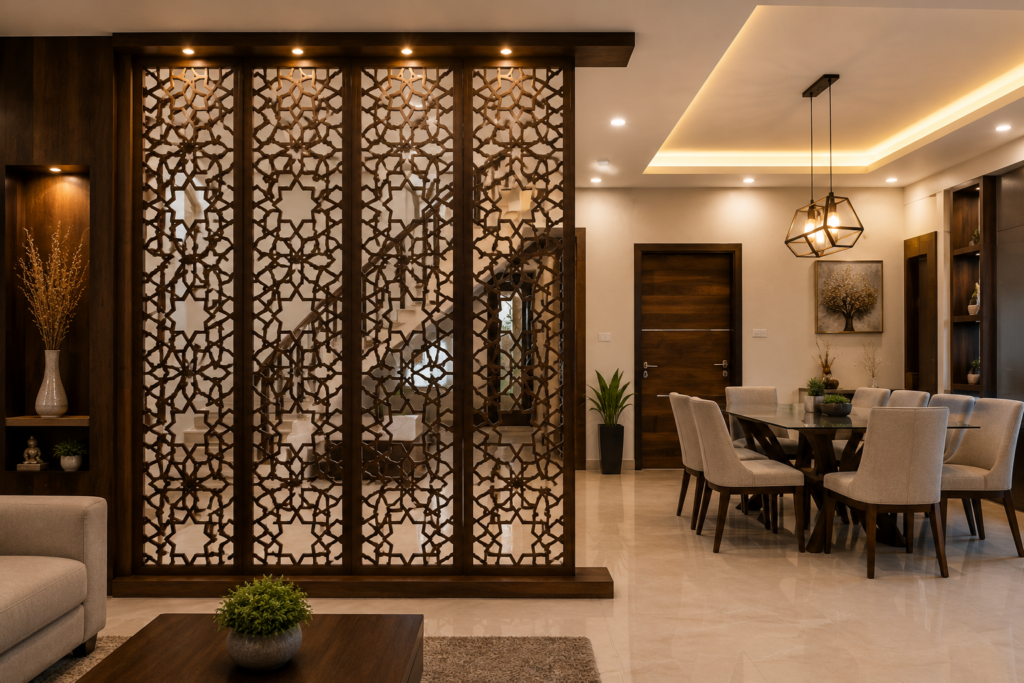
Custom CNC work has become increasingly popular in residential interiors because it combines aesthetics with functionality.
Decorative Wall Panels
Feature walls create visual interest in living rooms, bedrooms, and dining areas.
Decorative CNC panels can transform plain walls into elegant design elements without major structural changes.
Popular materials include:
- MDF
- PVC
- Acrylic
- Wood
CNC Jali Partitions
Open partitions help divide spaces while maintaining airflow and natural light.
Common locations include:
- Living room partitions
- Dining areas
- Staircase enclosures
- Prayer rooms
- Balcony privacy screens
Intricate Jali patterns add sophistication while serving a practical purpose.
Customized Furniture Components
Furniture manufacturers use CNC cutting to produce:
- Cabinet doors
- Wardrobe shutters
- Bed headboards
- TV units
- Bookshelves
- Decorative shelves
Precision machining ensures every component fits accurately during assembly.
Personalized Name Plates
Custom name plates provide a welcoming first impression.
Depending on the design, they may combine:
- Acrylic
- Wood
- Stainless steel
- PVC
- LED lighting
Customized fonts, logos, and decorative borders create a unique identity for each home.
Ceiling Designs
Modern false ceilings often include CNC-cut decorative elements that complement lighting layouts.
Popular choices include:
- Geometric patterns
- Floral designs
- Contemporary linear motifs
- Layered ceiling panels
These features enhance the visual appeal of living rooms, bedrooms, and reception areas.
Commercial Applications of Custom CNC Designs
Commercial environments require designs that balance aesthetics, branding, and durability.
Retail Stores
Retail spaces rely on attractive interiors to capture customer attention.
Custom CNC solutions can be used for:
- Display units
- Branding panels
- Product shelves
- Decorative partitions
- Reception counters
- Promotional installations
Consistent branding elements help create a memorable shopping experience.
Office Interiors
Modern offices increasingly incorporate CNC decorative panels to improve aesthetics without sacrificing functionality.
Common applications include:
- Reception desks
- Conference room partitions
- Feature walls
- Company logo installations
- Privacy screens
- Workstation dividers
Well-designed interiors contribute to a professional environment while reinforcing brand identity.
Choosing the Right Material for Custom CNC Designs
Selecting the right material is just as important as choosing the design itself. Each material has different properties that influence appearance, durability, maintenance, and cost. The best choice depends on where the finished product will be installed and how it will be used.
| Material | Best For | Advantages | Considerations |
|---|---|---|---|
| MDF | Decorative wall panels, furniture, Jali designs | Smooth surface, easy to paint, cost-effective | Suitable mainly for indoor use |
| Wood | Premium furniture, decorative partitions, carved panels | Natural appearance, durable, timeless | Requires periodic polishing and protection from moisture |
| PVC | Moisture-prone interiors, kitchens, bathrooms | Waterproof, lightweight, termite-resistant | Limited premium finish compared to wood |
| Acrylic | Signage, illuminated letters, branding | Glossy finish, modern appearance, available in many colors | Can scratch if handled improperly |
| ACP (Aluminium Composite Panel) | Exterior cladding, commercial facades, shop signs | Weather-resistant, lightweight, durable | Requires professional installation for best results |
A design that looks impressive on MDF may perform differently outdoors than the same design produced in ACP. Matching the material to the environment helps maximize both appearance and longevity.
CNC Decorative Panels vs Traditional Decorative Methods
Many property owners compare CNC-cut panels with manually fabricated decorative elements before making a decision.
| Feature | CNC Decorative Panels | Traditional Fabrication |
|---|---|---|
| Precision | Excellent | Depends on craftsmanship |
| Repeatability | Identical copies | Slight variations |
| Complex Designs | Easily achievable | Time-consuming |
| Production Speed | Fast | Slower |
| Material Waste | Lower | Generally higher |
| Large Projects | Efficient | More labor-intensive |
| Customization | Highly flexible | Limited by manual techniques |
Traditional craftsmanship still has its place, especially for heritage restoration or artistic hand carving. However, for projects requiring consistent quality, intricate detailing, and timely delivery, CNC technology offers significant practical advantages.
Expert Tips for Better CNC Design Results
Years of experience in CNC fabrication have shown that successful projects begin long before the machine starts cutting.
Start with Accurate Measurements
Even a beautifully designed panel can create installation problems if the measurements are inaccurate. Always verify dimensions at the project site before approving production.
Choose the Right Material
A decorative panel installed in an outdoor environment should be made from weather-resistant materials rather than standard indoor MDF.
Keep Designs Functional
Highly intricate patterns may look attractive on a computer screen, but they also need sufficient structural strength after cutting.
Consider Lighting
Decorative panels often become focal points when combined with LED lighting. Planning cable routes and lighting positions before fabrication helps achieve a cleaner installation.
Review Digital Drawings Carefully
A final review of the CAD drawing allows corrections before production begins, reducing delays and unnecessary material costs.
Common Mistakes to Avoid
Even well-planned projects can encounter problems if certain details are overlooked.
- Choosing materials based only on price
- Ignoring installation clearances
- Selecting designs that are too delicate for the material thickness
- Using indoor materials in outdoor environments
- Not accounting for maintenance requirements
- Overlooking lighting during the design stage
- Working from low-quality artwork or vector files
- Failing to inspect finished components before installation
Addressing these issues early helps avoid costly modifications later.
Factors That Influence the Cost of Custom CNC Designs
There is no universal price for custom CNC work because every project is unique. Several factors determine the overall cost.
Material Selection
Premium hardwood, acrylic, and ACP generally cost more than standard MDF or PVC.
Design Complexity
Simple geometric patterns require less machining time than intricate decorative motifs with hundreds of fine details.
Material Thickness
Thicker materials require different tooling and often increase machining time.
Quantity
Producing multiple identical components generally reduces the cost per unit because machine setup is completed only once.
Surface Finishing
Painting, polishing, edge finishing, lamination, powder coating, or LED integration all contribute to the final project cost.
Installation Requirements
Projects requiring on-site installation, large wall panels, or elevated exterior work involve additional labor and equipment.
For the most accurate estimate, provide complete dimensions, preferred material, finish, and design files during the quotation process.
Maintenance Tips for CNC Decorative Panels
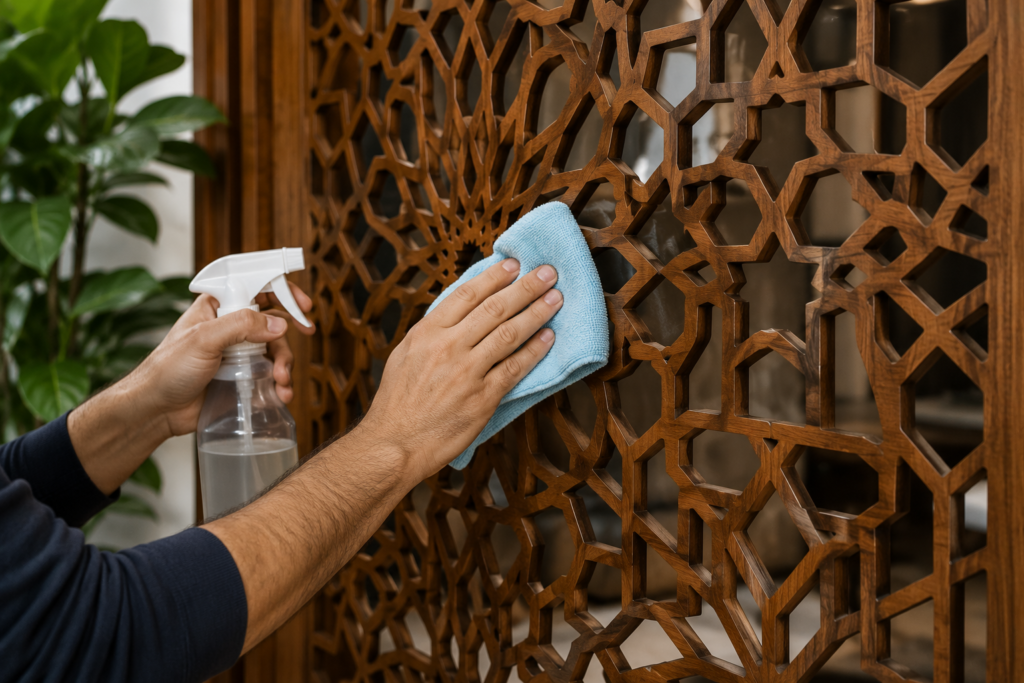
Proper maintenance helps preserve the appearance and performance of CNC-fabricated products.
- Dust decorative panels regularly using a soft microfiber cloth.
- Avoid abrasive cleaning chemicals on painted or acrylic surfaces.
- Inspect exterior installations periodically for loose fasteners.
- Reapply protective coatings to natural wood when recommended.
- Keep excessive moisture away from MDF installations.
- Clean acrylic panels with cleaners designed for acrylic to reduce scratching.
- Check LED lighting systems periodically if integrated into signage or decorative panels.
Routine maintenance extends product life while maintaining its visual appeal.
Frequently Asked Questions
1. What is a custom CNC design?
A custom CNC design is a digitally created design that is manufactured using computer-controlled cutting machines to produce highly accurate decorative or functional components.
2. Which material is best for CNC decorative panels?
The ideal material depends on the application. MDF is popular for indoor decorative panels, while ACP is preferred for outdoor projects. Acrylic and PVC are suitable for specialized applications.
3. Can CNC designs be customized to match interior themes?
Yes. Patterns, dimensions, finishes, and materials can all be customized to complement residential or commercial interiors.
4. Are CNC decorative panels durable?
When manufactured using quality materials and installed correctly, CNC decorative panels offer excellent durability for their intended environment.
5. How accurate are CNC machines?
Modern CNC equipment can produce components with extremely high precision, making them suitable for detailed architectural and manufacturing applications.
6. Can CNC machines cut different materials?
Yes. Depending on the machine configuration, CNC equipment can cut MDF, plywood, wood, acrylic, PVC, ACP, and several other sheet materials.
7. Are custom CNC designs suitable for commercial branding?
Absolutely. Businesses frequently use CNC technology for logo panels, 3D letter signage, reception areas, display units, and branded interiors.
8. How long does a CNC project take?
Production time depends on design complexity, material availability, finishing requirements, and project size. Simple projects may be completed quickly, while large custom installations require additional planning and fabrication.
9. Are CNC decorative panels easy to maintain?
Most panels require only routine cleaning and occasional inspections. Maintenance varies depending on the material and installation environment.
10. Why choose professional CNC fabrication?
Professional fabrication ensures accurate dimensions, quality material selection, proper finishing, and reliable installation support throughout the project.
Conclusion
Custom CNC design is more than a manufacturing process—it is a practical way to combine creativity, precision, and efficiency in modern construction and interior projects. From elegant decorative panels in homes to branded installations in commercial spaces, CNC technology enables designs that would be difficult to achieve through conventional fabrication methods.
The long-term success of any CNC project depends on thoughtful planning, accurate measurements, suitable material selection, and skilled execution. Working with an experienced fabrication team helps ensure that every component is produced to specification, fits correctly, and performs as intended.
At Sourav CNC Works, we provide precision CNC cutting and custom fabrication solutions for residential, commercial, and industrial projects. Whether you need decorative panels, CNC Jali designs, custom signage, or specialized cutting services for MDF, acrylic, PVC, ACP, or wood, our focus is on delivering reliable workmanship and quality results tailored to your project requirements.