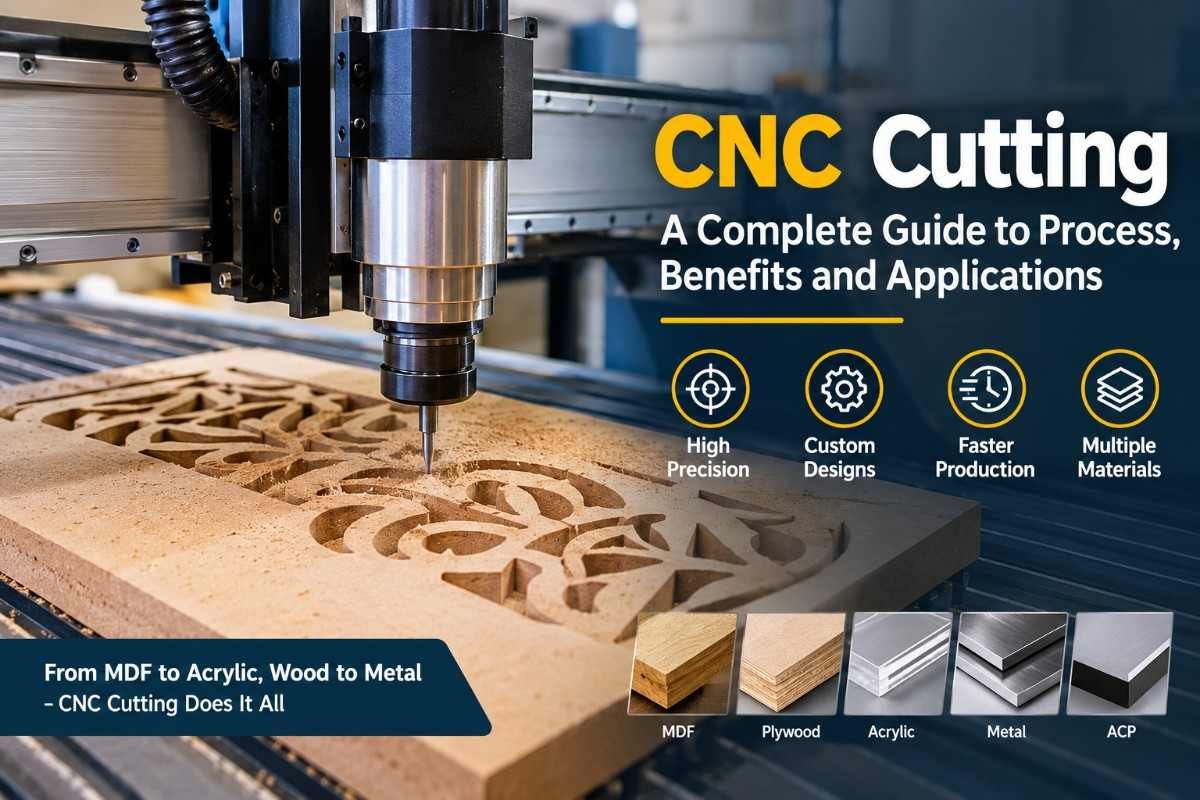
CNC cutting has changed the way businesses, furniture manufacturers, interior designers, and fabricators create precise parts and designs. Instead of relying completely on manual tools, a CNC machine follows digital instructions to cut materials with consistent accuracy.
Whether you need customized furniture parts, MDF panels, acrylic designs, signage, or detailed decorative patterns, CNC cutting can provide a practical and repeatable solution.
In this guide, we will explain what CNC cutting is, how the process works, the materials it can handle, its major benefits, common applications, and how to choose the right CNC cutting service.
What Is CNC Cutting?
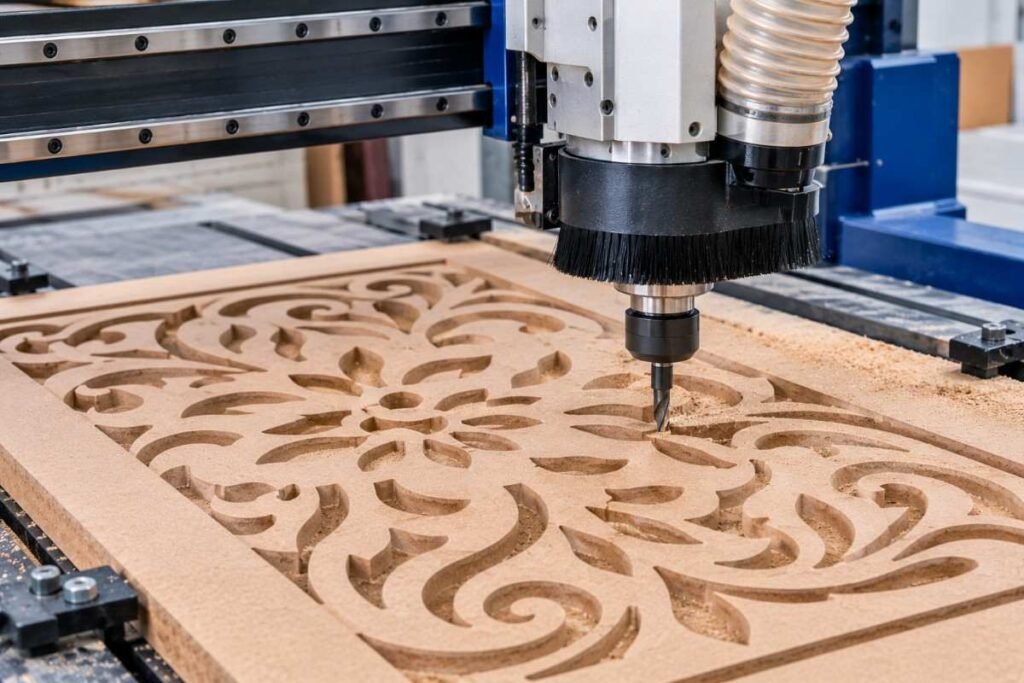
CNC stands for Computer Numerical Control. CNC cutting is a manufacturing process where a computer-controlled machine cuts, engraves, drills, or shapes a material according to a digital design.
Designers usually prepare the design using CAD or similar design software. The machine then follows the instructions and moves the cutting tool along specific paths.
This process allows manufacturers to create both simple and highly detailed shapes.
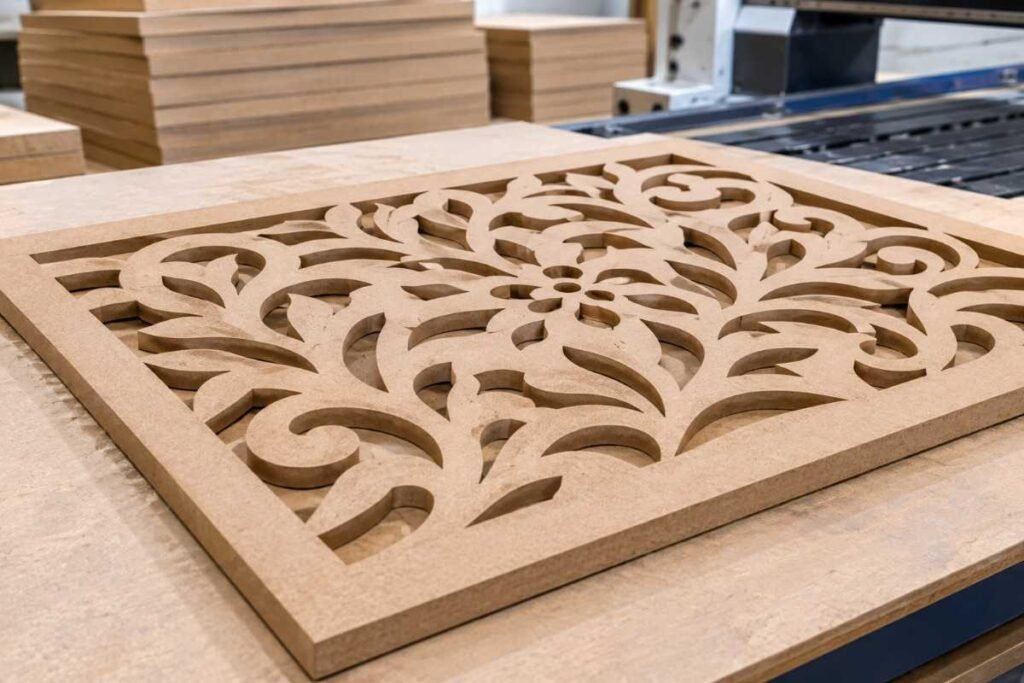
For example, a CNC router can cut a flat MDF sheet into furniture components. It can also create decorative patterns, grooves, holes, and custom designs.
For beginners, understanding the basic process first can make it easier to choose the right machine and service.
How Does CNC Cutting Work?
Isko simple active voice mein aise likho:
CNC machines may use advanced technology, but the basic process is easy to understand.
1. Create the Digital Design
First, designers create the required shape or design using CAD or other compatible software.
The design contains important information such as dimensions, curves, holes, and cutting paths.
The design contains important information such as dimensions, curves, holes, and cutting paths.
2. Prepare the CNC File
The software converts the digital design into machine-readable instructions. These instructions tell the CNC machine how to move and where to cut.
3. Set Up the Material
The operator securely places the material on the CNC machine bed.
Proper positioning is important because even a small movement can affect the final result.
4. Select the Cutting Tool
The appropriate tool depends on the material and the type of work.
The appropriate tool depends on the material and the type of work.
For example, operators can use different router bits for MDF, plywood, acrylic, or solid wood.
5. Start the Cutting Process
Once the operator checks the settings, the machine follows the programmed cutting path.
The operator monitors the process to ensure that the material and machine are working properly.
6. Inspect and Finish the Part
After cutting, the operator removes the finished part and checks its dimensions, edges, and overall quality.
The operator can then complete any additional finishing required for the project.
Types of CNC Cutting
CNC cutting is not limited to one type of machine. Different technologies are used depending on the material, thickness, design, and required finish.
CNC Router Cutting
CNC routers are widely used for materials such as:
- MDF
- Plywood
- Wood
- Acrylic
- PVC
- Some composite materials
They are especially useful for furniture components, interior designs, decorative panels, and custom shapes.
A router can also perform engraving and other machining operations depending on the machine and tooling.
CNC Laser Cutting
Laser cutting uses a focused laser beam to cut or engrave materials.
It is often used for applications that require detailed patterns and clean designs.
Materials commonly processed with laser cutting include certain types of acrylic, wood, paper, and other suitable materials.
However, the appropriate laser settings and material compatibility should always be checked before production.
CNC Plasma Cutting
Plasma cutting is commonly associated with electrically conductive metals.
It can be useful when working with materials such as steel, stainless steel, and aluminum, depending on the equipment and application.
CNC Waterjet Cutting
Waterjet cutting uses a high-pressure water stream, often combined with an abrasive material, to cut various materials.
It can be useful for applications involving materials that may be difficult to process using conventional thermal cutting methods.
The right technology depends on the project rather than simply choosing the most advanced machine.
What Materials Can Be Used for CNC Cutting?
One of the major advantages of CNC cutting is its ability to work with different materials.
However, the suitable material depends on the machine, tooling, thickness, and design.
Common materials include:
- MDF
- Plywood
- Natural wood
- Acrylic
- PVC
- ACP and certain composite materials
- Some plastics
- Certain metals when using suitable CNC equipment
MDF CNC Cutting
MDF is commonly used for furniture, wall panels, partitions, decorative designs, and interior projects.
CNC cutting makes it possible to create accurate shapes and repeat the same design across multiple pieces.
Wood CNC Cutting
Wood can be shaped into furniture components, decorative panels, doors, signs, and custom designs.
The final quality depends on factors such as wood type, cutter selection, machine settings, and finishing.
Acrylic CNC Cutting
Acrylic is popular for signs, displays, decorative panels, and other design applications.
For certain acrylic projects, laser cutting may also be considered depending on the required finish and design.
ACP Cutting
ACP, or Aluminium Composite Panel, is commonly used in architectural and signage applications.
Specialized cutting equipment and appropriate tooling are important when working with composite panels.
Benefits of CNC Cutting
CNC cutting offers several practical advantages compared with many manual cutting methods.
High Precision
The machine follows a programmed digital path. As a result, it can produce accurately shaped components when the design, machine setup, and material are properly controlled.
Consistent Results
If multiple identical parts are required, CNC cutting can reproduce the same design repeatedly.
This is particularly useful for furniture manufacturing and commercial projects.
Complex Designs
Manual cutting can become difficult when a design contains intricate curves, patterns, or repeated details.
CNC machines can follow complex digital paths and create detailed designs with suitable tooling.
Faster Production
Once the design and machine setup are ready, multiple parts can often be produced efficiently.
This can help reduce manual cutting time, especially for repeated production work.
Better Material Utilization
A well-planned digital cutting layout can help arrange multiple parts efficiently on a sheet.
This can potentially reduce unnecessary material waste.
However, actual material savings depend on the design, sheet dimensions, cutting requirements, and layout.
Customization
CNC technology is suitable for customized designs.
A customer can provide specific dimensions, shapes, patterns, or design requirements, which can then be converted into machine instructions.
Where Is CNC Cutting Used?
CNC cutting is used across many industries and projects.
Furniture Manufacturing
Furniture manufacturers can use CNC machines to produce:
- Cabinet components
- Shelves
- Doors
- Table parts
- Decorative panels
- Custom furniture components
The ability to reproduce identical parts can be particularly useful in furniture production.
Interior Design
Interior designers and fabricators can use CNC cutting for customized wall panels, partitions, screens, decorative elements, and other architectural details.
Signage
CNC cutting can be used to create letters, logos, shapes, and display components from suitable materials.
For example, acrylic, MDF, PVC, and composite materials may be used for different signage requirements.
Architecture and Construction
CNC technology can help create customized components and prototypes used in architectural and construction-related projects.
Accurate digital fabrication can also make it easier to reproduce a design across multiple components.
Prototyping
Designers and manufacturers can use CNC cutting to create physical prototypes before moving to larger-scale production.
This allows dimensions and design concepts to be checked before committing to a larger batch.
CNC Cutting vs Manual Cutting
Manual cutting can be suitable for simple tasks and small projects. However, CNC cutting offers computer-controlled precision and repeatability.
| Feature | CNC Cutting | Manual Cutting |
|---|---|---|
| Precision | Computer-controlled | Depends heavily on operator |
| Repeatability | High for suitable jobs | Can vary |
| Complex designs | Suitable | Often more difficult |
| Customization | Highly flexible | Possible but more labor-intensive |
| Production quantity | Suitable for repeated parts | Better suited to simpler jobs |
| Digital workflow | Yes | Usually limited |
The right method depends on the project’s requirements, budget, material, quantity, and desired finish.
How to Choose the Right CNC Cutting Service
Choosing a CNC cutting service requires more than looking at the machine alone.
Consider the following factors.
Check Material Compatibility
First, confirm that the service provider works with your required material.
Ask about material thickness and available cutting methods.
Review Machine Capability
Different CNC machines have different working areas, spindle capabilities, tooling options, and material limitations.
Make sure the machine is suitable for your design.
Ask About Design Files
Find out which file formats the service accepts.
A professional workflow should make it clear how the design will be prepared before production.
Check Accuracy Requirements
If your project requires tight dimensions, discuss the required tolerance before production begins.
This is especially important for components that need to fit together.
Consider Quantity
A one-time custom piece and a large production order may require different approaches.
Discuss the quantity in advance so the service provider can plan the production process properly.
Review Finishing Requirements
CNC cutting produces the cut shape, but some projects also require sanding, polishing, painting, edge finishing, or assembly.
Discuss these requirements before placing the order.
If you are comparing different providers, a detailed guide on how to choose the right CNC cutting service can also help you evaluate important factors before making a decision.
Common CNC Cutting Mistakes to Avoid
Even a good CNC machine cannot compensate for a poorly prepared project.
Here are some common mistakes to avoid:
- Providing incorrect dimensions
- Using an unsuitable material
- Ignoring material thickness
- Using an incorrect cutting tool
- Not checking the digital design
- Forgetting required holes or slots
- Failing to secure the material properly
- Not discussing finishing requirements
- Starting production without confirming the final design
A simple design review before production can prevent many avoidable problems.
Practical Example of CNC Cutting
Imagine a furniture manufacturer needs 100 identical MDF cabinet panels.
With manual cutting, each panel would need to be measured and cut individually. Even small differences could affect assembly.
With CNC cutting, the digital design can be prepared once and used to produce multiple matching panels.
The operator can arrange the components efficiently on the MDF sheet, set the appropriate cutting parameters, and monitor the production process.
After cutting, the panels can be inspected and sent for the required finishing process.
This example shows why CNC cutting is useful when accuracy, repeatability, and customization are important.
Safety Considerations for CNC Cutting
CNC machines are powerful pieces of industrial equipment.
Operators should follow the machine manufacturer’s safety instructions and appropriate workplace safety procedures.
Important practices can include:
- Wearing suitable personal protective equipment where required
- Keeping hands away from moving cutting tools
- Securing the material correctly
- Checking the machine before operation
- Using suitable tooling
- Maintaining a clean work area
- Following manufacturer operating instructions
- Ensuring operators are properly trained
Safety requirements can vary depending on the machine, material, and workplace environment.
Frequently Asked Questions
What is CNC cutting?
CNC cutting is a computer-controlled manufacturing process used to cut, shape, engrave, or machine materials according to a digital design.
What materials can CNC machines cut?
Depending on the machine and tooling, CNC equipment can process materials such as MDF, plywood, wood, acrylic, plastics, composites, and certain metals.
Is CNC cutting accurate?
CNC cutting can provide high precision and repeatability when the machine is properly calibrated, and the design, tooling, material, and cutting parameters are suitable.
Is CNC cutting suitable for custom designs?
Yes. CNC machines are commonly used for customized shapes, patterns, furniture components, signage, decorative panels, and prototypes.
Is CNC cutting better than manual cutting?
The suitable method depends on the project. CNC cutting can offer advantages in precision, repeatability, complex designs, and repeated production, while manual cutting may be appropriate for simpler jobs.
How much does CNC cutting cost?
The cost depends on factors such as material, thickness, design complexity, quantity, machine time, finishing requirements, and the type of CNC process used.
Can CNC cutting be used for MDF?
Yes. CNC routers are commonly used for MDF applications such as furniture components, decorative panels, partitions, and custom designs.
Conclusion
CNC cutting provides a practical way to create accurate, repeatable, and customized components from a range of materials. From MDF furniture parts and decorative interior panels to signage and prototypes, CNC technology can support many different applications.
The key is to choose the appropriate machine, material, tooling, design, and service provider for the specific project.
Before starting production, always confirm the dimensions, material, design file, finishing requirements, and quantity. With proper planning, CNC cutting can make complex fabrication work more efficient and consistent.