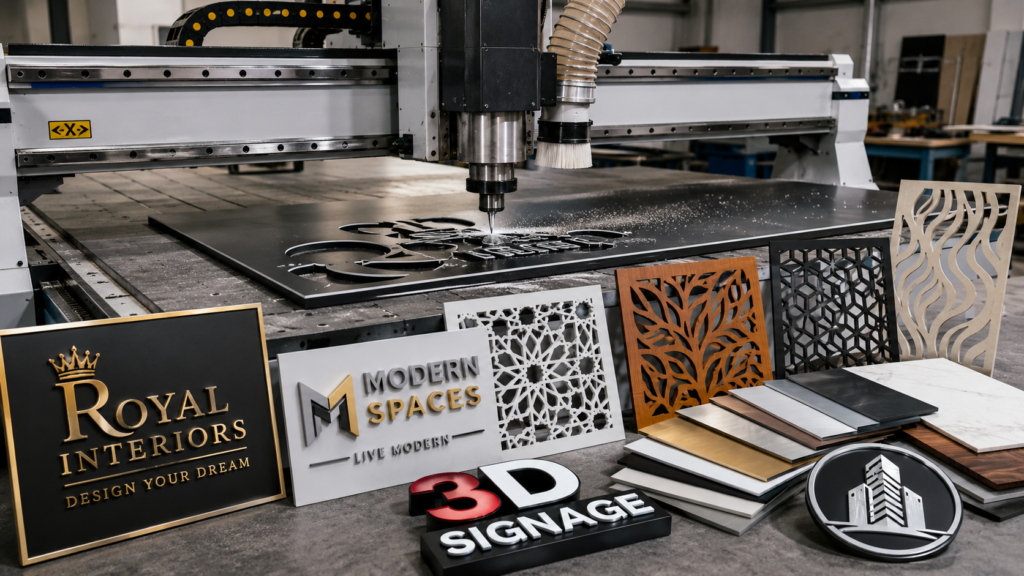
ACP (Aluminium Composite Panel) has become one of the most preferred materials for modern construction, commercial interiors, signage, and architectural projects. Its lightweight structure, attractive finish, and durability make it suitable for everything from storefront signage to decorative wall panels.
The quality of the finished product, however, depends heavily on how accurately the ACP sheet is cut. Traditional cutting methods often leave rough edges, inaccurate dimensions, or surface damage. CNC ACP Cutting solves these challenges by delivering clean, consistent, and highly precise cuts for both simple and complex designs.
At Sourav CNC Works, we provide professional CNC cutting solutions for ACP sheets used in commercial, residential, and industrial applications. Whether you require customized signage, decorative panels, partitions, or architectural designs, precision cutting plays a vital role in achieving a professional finish.
This guide explains everything you need to know about ACP Cutting Services, including materials, applications, cutting methods, design possibilities, quality standards, and practical considerations before choosing a service provider.
What is ACP?
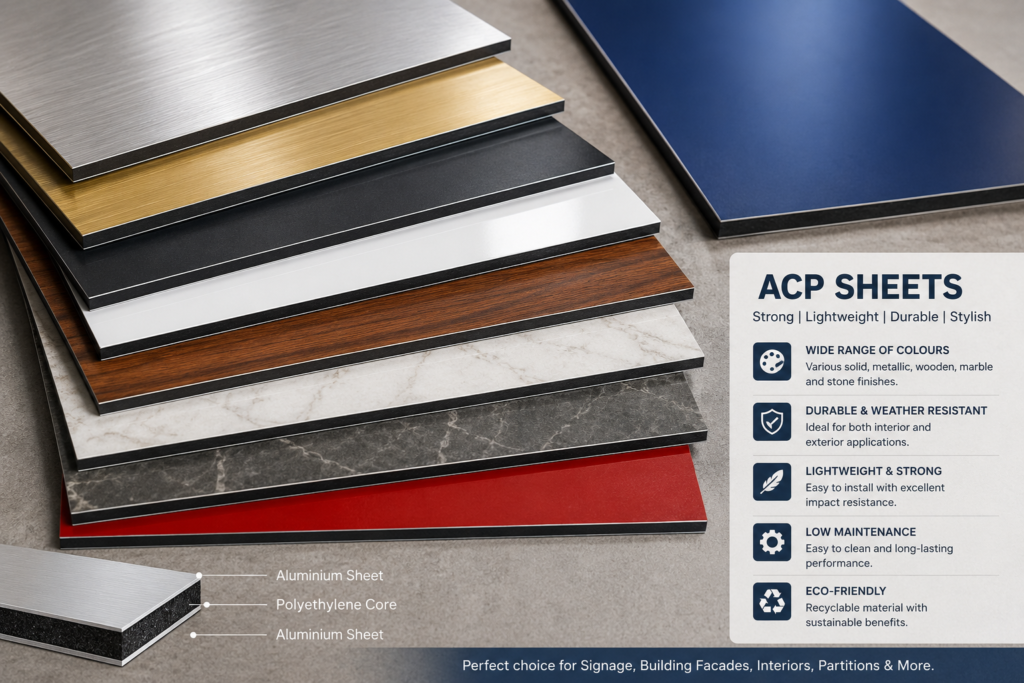
ACP stands for Aluminium Composite Panel, a modern building material made by bonding two thin aluminium sheets to a non-aluminium core. This combination provides excellent strength while keeping the panel lightweight.
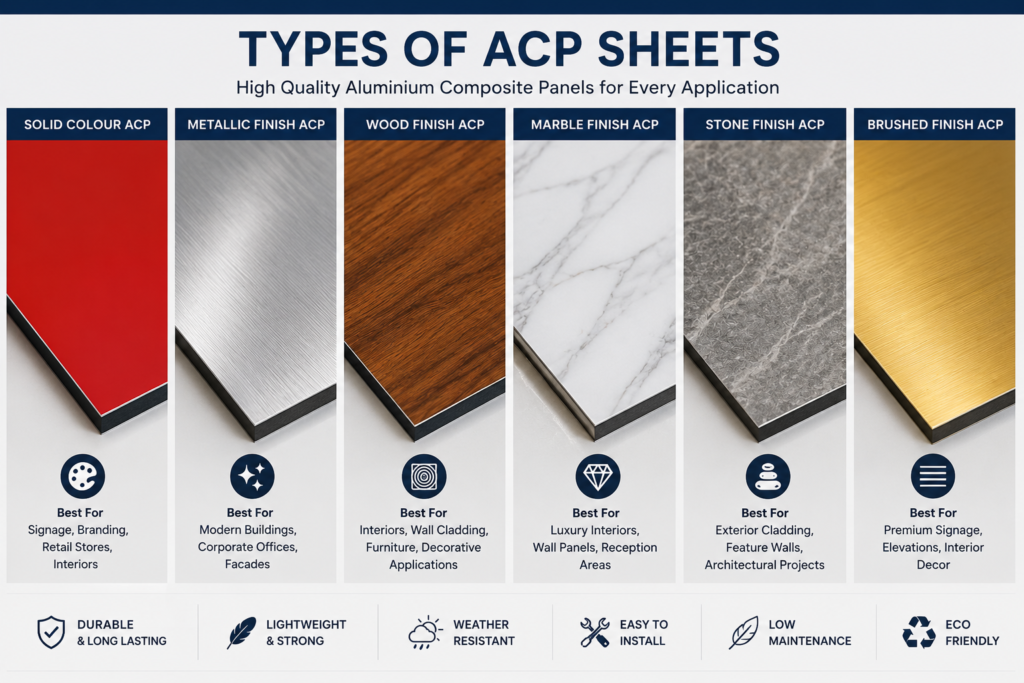
ACP sheets are available in a wide range of:
- Colors
- Metallic finishes
- Wooden textures
- Marble textures
- Stone finishes
- Matte finishes
- Gloss finishes
- Brushed aluminium finishes
Because of their versatility, ACP sheets are widely used for both interior and exterior projects.
Common applications include:
- Building facades
- Shop front signage
- Office branding
- Reception walls
- False ceilings
- Decorative partitions
- Wall cladding
- Advertising boards
- Retail display units
- CNC decorative panels
What are ACP Cutting Services?
ACP Cutting Services involve shaping aluminium composite panels into customized sizes, patterns, logos, letters, and decorative designs using specialized machinery.
Professional cutting ensures:
- Accurate dimensions
- Smooth edges
- Clean finishes
- Consistent quality
- Minimal material wastage
Depending on the project, ACP sheets may be cut into:
- Company logos
- Sign boards
- Name plates
- Decorative wall panels
- CNC jali patterns
- Machine covers
- Display units
- Architectural panels
- Interior partitions
- Custom furniture components
How CNC ACP Cutting Works
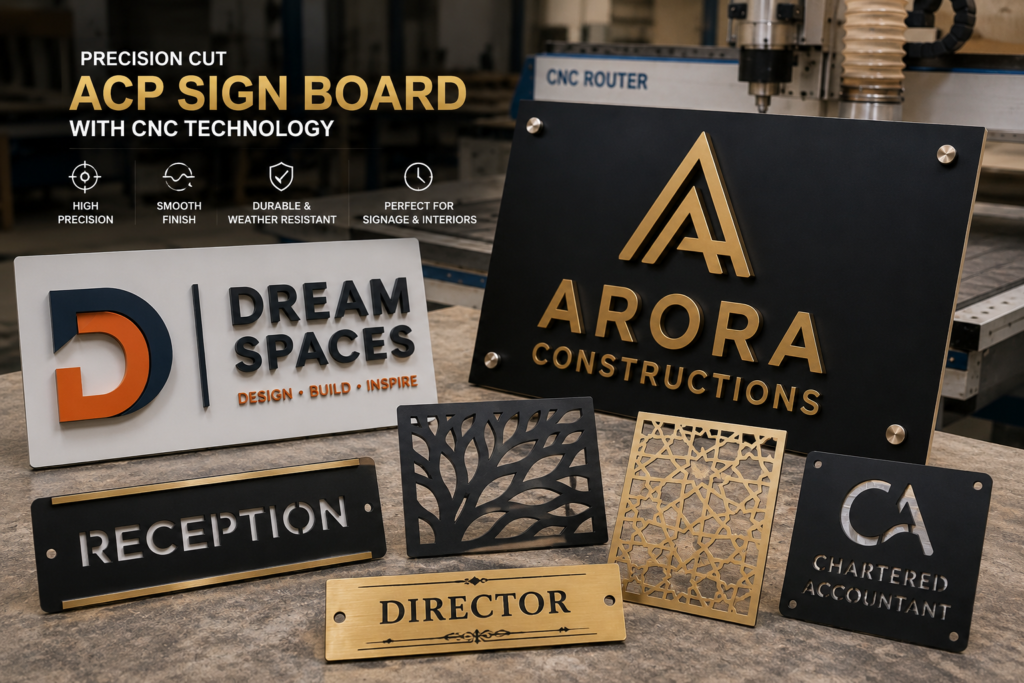
Unlike manual cutting methods, CNC ACP Cutting uses computer-controlled routing machines that follow a digital design file with high precision.
Step 1: Design Preparation
The required design is created using CAD software.
This includes:
- Measurements
- Curves
- Lettering
- Engraving paths
- Cutting lines
Every dimension is checked before production begins.
Step 2: Material Selection
The appropriate ACP sheet is selected based on:
- Thickness
- Surface finish
- Application
- Color
- Core material
Choosing the correct sheet at this stage helps avoid bending issues, edge defects, or installation problems later.
Step 3: Machine Programming
The design is converted into machine-readable instructions.
The CNC router automatically follows these instructions with exceptional accuracy, ensuring every cut matches the approved design.
Step 4: Precision Cutting
The CNC router performs:
- Straight cuts
- Curved cuts
- Circular shapes
- Intricate decorative patterns
- Letter cutting
- Logo cutting
- Pocket cutting
- Groove cutting
This process produces smooth edges and consistent results with minimal manual intervention.
Step 5: Quality Inspection
Before delivery, each panel is inspected for:
- Edge quality
- Dimensional accuracy
- Surface scratches
- Corner finishing
- Design consistency
Panels that meet quality standards proceed to packaging and dispatch.
Benefits of CNC ACP Cutting
High Precision
Modern CNC routers can achieve exceptional cutting accuracy, making them ideal for projects where dimensions and alignment are critical.
This level of precision is especially important for:
- Corporate branding
- Architectural elevations
- Reception signage
- Decorative wall installations
Smooth Edge Finish
Professional CNC cutting minimizes rough edges and reduces the need for extensive finishing work.
Clean edges improve both appearance and ease of installation.
Complex Design Capability
One of the biggest advantages of CNC routing is its ability to create intricate designs that would be difficult or impossible with manual tools.
Examples include:
- Floral patterns
- Islamic jali designs
- Geometric panels
- Company logos
- Decorative partitions
- Customized name boards
Consistent Production Quality
When multiple panels are required, CNC machines reproduce each design with the same level of precision.
This consistency is particularly valuable for large commercial projects where every panel must match perfectly.
Faster Project Completion
Once the design is approved, CNC machines can produce components much faster than manual cutting methods, helping reduce project timelines.
Reduced Material Waste
Accurate programming optimizes material usage by minimizing unnecessary cuts and errors.
This helps control costs while making better use of each ACP sheet.
Types of ACP Sheets
Selecting the right ACP sheet depends on where it will be installed and the performance required.
| Type | Best Used For | Key Features |
|---|---|---|
| Interior ACP | Offices, homes, reception areas | Lightweight, decorative finishes |
| Exterior ACP | Building facades, outdoor signage | UV-resistant and weatherproof |
| Fire-Retardant ACP | Commercial buildings | Improved fire performance |
| Wooden Finish ACP | Interior décor | Natural wood appearance with low maintenance |
| Marble Finish ACP | Luxury interiors | Elegant stone-like finish without the weight |
| Metallic ACP | Corporate projects | Modern and premium appearance |
Popular ACP Sheet Design Ideas
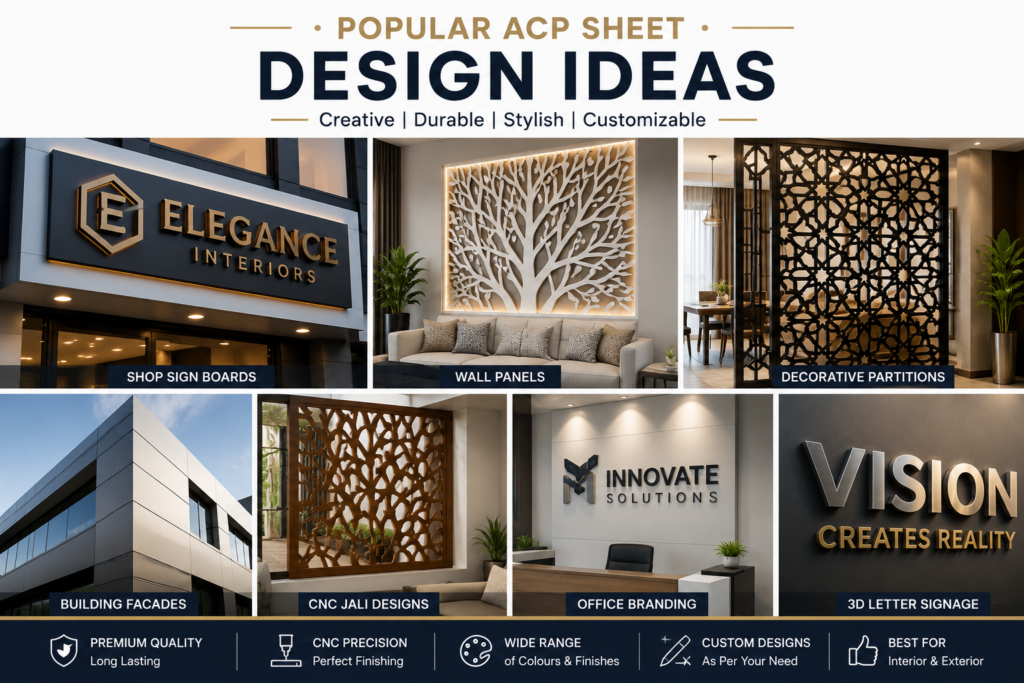
ACP sheets can be customized for a wide variety of creative and functional applications.
Popular choices include:
Modern Office Reception Panels
Clean, minimalist designs featuring company logos and branding elements.
Decorative CNC Jali Panels
Ideal for partitions, feature walls, and privacy screens in homes and commercial spaces.
Retail Shop Signage
Custom-cut ACP signboards provide a professional look while standing up to outdoor conditions.
Building Facades
Large-format ACP panels create sleek, modern exteriors with excellent durability.
3D Letter Signage
ACP is commonly used as a backing material for illuminated and non-illuminated letters, offering strength and a polished finish.
Applications of ACP Cutting Services
ACP sheets have become a preferred choice across multiple industries because they combine durability, aesthetics, and ease of fabrication. With CNC technology, they can be transformed into highly customized products for commercial and residential projects.
1. Commercial Signage
ACP is one of the most widely used materials for sign boards due to its smooth finish and weather resistance.
Common examples include:
- Shop sign boards
- Corporate branding
- Office signs
- Hospital signage
- School and college sign boards
- Mall directory boards
- Hotel branding
- Petrol pump signage
CNC cutting ensures sharp lettering, clean logo shapes, and precise dimensions that give signage a professional appearance.
2. Building Facades
Modern commercial buildings frequently use ACP cladding to create elegant and durable exteriors.
Benefits include:
- Lightweight construction
- Attractive appearance
- Easy installation
- Weather resistance
- Low maintenance
- Long service life
Custom CNC-cut ACP panels can also incorporate architectural patterns and branding elements into the building façade.
3. Interior Wall Panels
Interior designers use ACP sheets to create decorative wall features in:
- Corporate offices
- Reception areas
- Hotels
- Restaurants
- Retail stores
- Showrooms
- Hospitals
- Educational institutions
Available in wood, marble, metallic, and solid-color finishes, ACP panels enhance interiors while remaining easy to maintain.
4. Decorative Partitions
Laser-like precision from CNC routers allows ACP sheets to be cut into intricate patterns for:
- Room dividers
- Office cabins
- Waiting areas
- Decorative screens
- Balcony partitions
- Staircase panels
These partitions provide privacy without blocking light, making them popular in modern interior designs.
5. CNC Jali Designs
ACP is an excellent material for decorative jali work because it is lightweight and resistant to moisture.
Popular jali styles include:
- Geometric patterns
- Floral motifs
- Islamic designs
- Contemporary abstract designs
- Traditional Indian patterns
These designs are commonly installed in homes, offices, cafés, temples, and commercial buildings.
6. Retail Display Units
Retail stores often use CNC-cut ACP for:
- Product display stands
- Brand displays
- Promotional counters
- Exhibition booths
- Kiosks
- Point-of-sale displays
Its smooth finish supports high-quality vinyl graphics and printed branding.

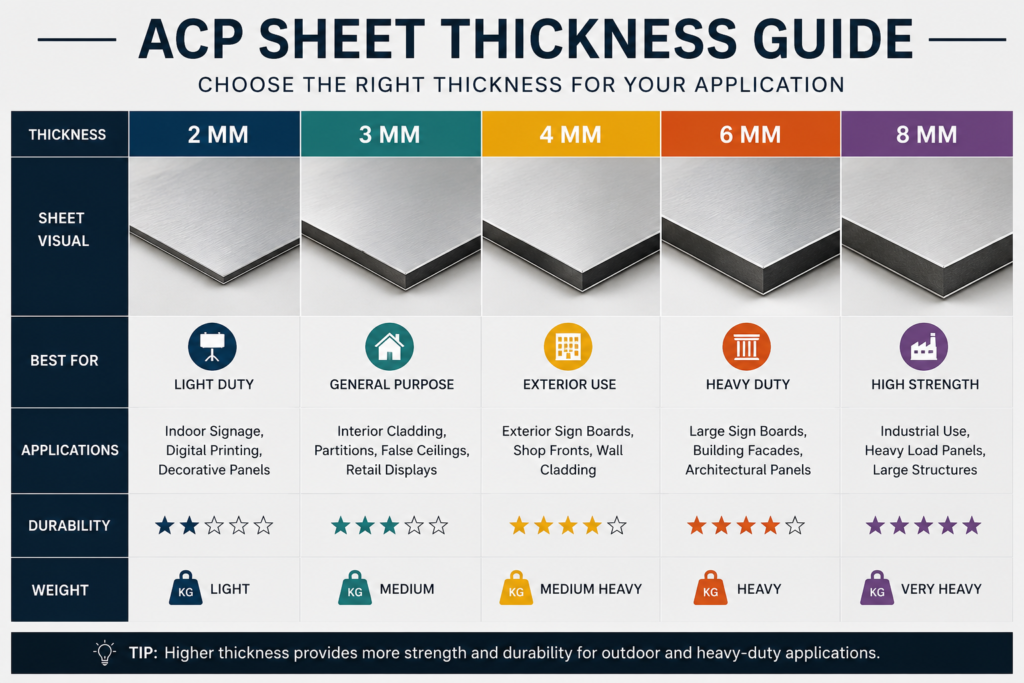
Choosing the Right ACP Thickness
Selecting the correct sheet thickness is essential for durability, safety, and long-term performance.
| ACP Thickness | Common Applications |
|---|---|
| 3 mm | Interior wall panels, signage, decorative work |
| 4 mm | Exterior cladding, commercial signage, shop fronts |
| 5 mm | Heavy-duty architectural applications |
| 6 mm and above | Specialized industrial or structural projects |
Factors to Consider
Choose thickness based on:
- Installation location
- Wind load (for outdoor use)
- Panel size
- Structural support
- Design complexity
- Budget
A professional fabricator can recommend the most suitable option based on your project requirements.
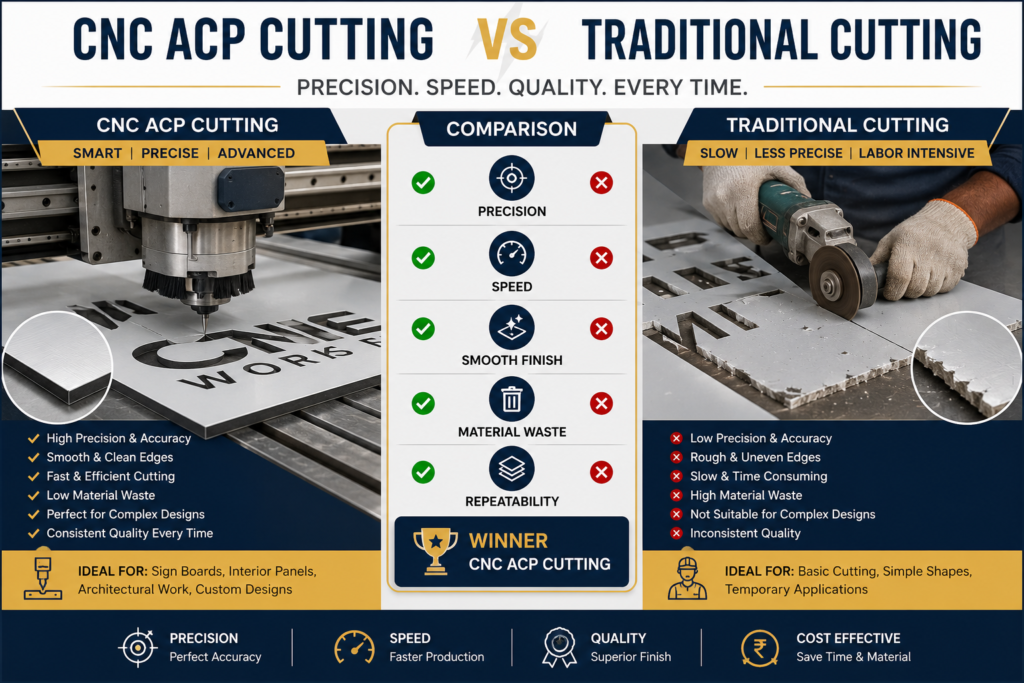
CNC ACP Cutting vs Traditional Cutting
| Feature | CNC ACP Cutting | Traditional Cutting |
|---|---|---|
| Accuracy | Excellent | Moderate |
| Repeatability | Consistent | Varies |
| Complex Designs | Easy | Difficult |
| Material Waste | Low | Higher |
| Edge Finish | Smooth | May require finishing |
| Production Speed | Fast | Slower |
| Human Error | Minimal | Higher |
| Large Projects | Ideal | Less efficient |
For projects involving logos, branding, decorative panels, or architectural elements, CNC cutting delivers superior quality and consistency.
Cost Factors for ACP Cutting Services
The cost of ACP cutting depends on several practical factors rather than a fixed price.
1. ACP Sheet Thickness
Thicker sheets require more machining time and durable cutting tools, increasing production costs.
2. Design Complexity
A simple rectangular cut is significantly faster than intricate patterns involving fine details and multiple curves.
3. Quantity
Bulk orders often reduce the cost per panel because machine setup time is distributed across more pieces.
4. Material Grade
Premium ACP sheets with specialized finishes, such as metallic or wood textures, typically cost more than standard solid-color panels.
5. Surface Finish
Additional processes like engraving, grooving, edge polishing, or protective coatings may add to the overall project cost.
6. Project Timeline
Urgent or same-day production requests may involve higher charges due to priority scheduling.
Buying Guide: How to Choose the Right ACP Cutting Service
Selecting the right fabrication partner has a direct impact on the quality and lifespan of your project.
Check Their CNC Equipment
Modern CNC router machines produce cleaner cuts, better repeatability, and improved efficiency compared to outdated equipment.
Review Previous Projects
Ask to see examples of completed work to assess:
- Edge quality
- Design precision
- Finishing
- Variety of applications
A diverse portfolio indicates experience with different project requirements.
Confirm Material Quality
Ensure that the service provider uses genuine, high-quality ACP sheets from reputable manufacturers suited to your intended application.
Discuss Design Support
A good CNC service provider should assist with:
- CAD file preparation
- Design optimization
- Material selection
- Feasibility checks
This helps prevent production issues and unnecessary material waste.
Evaluate Delivery Capabilities
Reliable turnaround times and secure packaging are especially important for large or fragile panels.
Expert Tips from Industry Experience
Based on practical fabrication experience, these recommendations can improve the outcome of your ACP project:
- Finalize all measurements before production begins.
- Use vector files (such as DXF, AI, or CDR) for accurate CNC cutting.
- Keep protective film on ACP sheets until installation is complete to avoid scratches.
- Choose exterior-grade ACP for outdoor applications.
- Match panel thickness to the structural requirements of the installation.
- Allow for thermal expansion gaps during installation of large outdoor panels.
- Plan cable routes in advance if illuminated signage is involved.
Common Mistakes to Avoid
Avoiding these common issues can save both time and money.
Choosing the Wrong Thickness
Using thin ACP sheets for exterior applications may result in panel deformation over time.
Ignoring Installation Conditions
Outdoor panels should always be selected with weather resistance and UV exposure in mind.
Low-Quality Design Files
Poor-quality artwork or incorrect dimensions often lead to production delays and unnecessary revisions.
Focusing Only on Price
The lowest quotation may not provide the best value if it compromises material quality, cutting accuracy, or finishing.
Skipping Quality Inspection
Always inspect finished panels for:
- Accurate dimensions
- Clean edges
- Proper finish
- Surface protection
- Correct quantity
A final quality check helps identify any issues before installation.
Maintenance Tips for ACP Panels
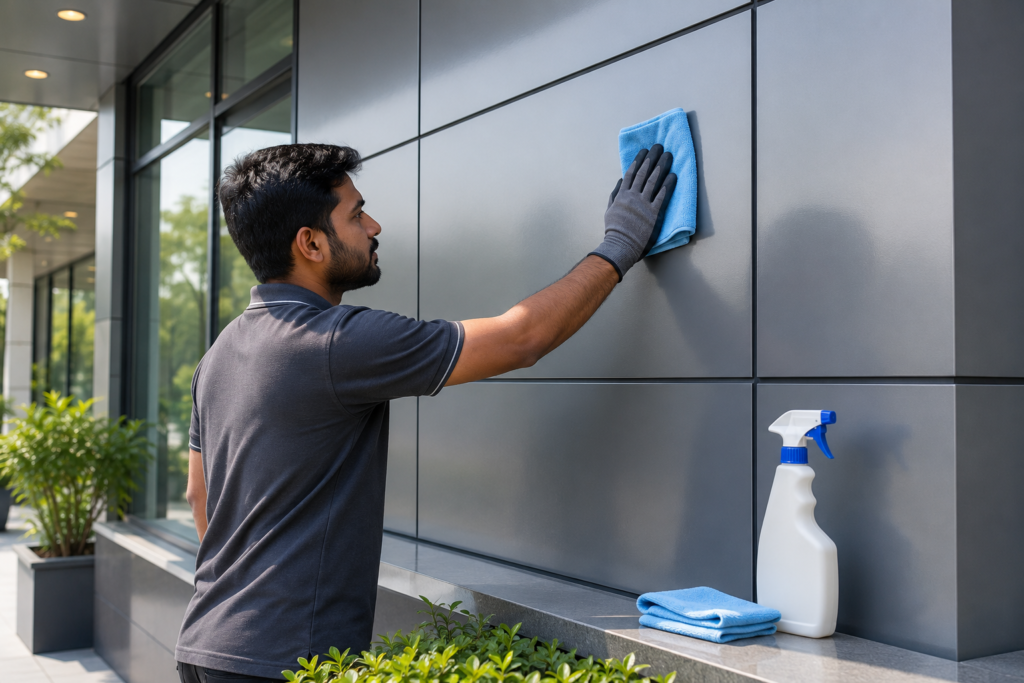
ACP panels are known for being low maintenance, but proper care extends their appearance and lifespan.
- Clean surfaces regularly using a soft cloth and mild detergent.
- Avoid abrasive cleaners or steel wool that can scratch the finish.
- Rinse with clean water after washing to remove residue.
- Inspect outdoor panels periodically for loose fixings or sealant wear.
- Remove dirt and pollution buildup in high-traffic urban environments.
- Avoid impact from heavy objects that could dent the aluminium surface.
Proper maintenance helps preserve both the appearance and structural integrity of ACP installations.
Frequently Asked Questions (FAQs)
1. What is ACP cutting?
ACP cutting is the process of cutting Aluminium Composite Panels into custom sizes, shapes, logos, letters, and decorative designs using CNC router machines or specialized cutting equipment. CNC cutting provides cleaner edges and greater accuracy than manual methods.
2. What is CNC ACP cutting?
CNC ACP cutting uses computer-controlled router machines to cut ACP sheets according to a digital design file. It delivers precise dimensions, smooth finishes, and repeatable results, making it ideal for signage, architectural panels, and decorative applications.
3. Where are ACP sheets commonly used?
ACP sheets are widely used for:
- Building facades
- Shop sign boards
- Office branding
- Reception walls
- Interior wall cladding
- Decorative partitions
- CNC jali panels
- Exhibition stalls
- Retail displays
- Exterior cladding
4. Which ACP sheet thickness is best?
The right thickness depends on the application:
- 3 mm: Interior wall panels and signage
- 4 mm: Exterior cladding and commercial sign boards
- 5 mm: Large architectural projects
- 6 mm+: Specialized industrial applications
Always consult a professional fabricator to select the appropriate thickness for your project.
5. Is ACP suitable for outdoor use?
Yes. Exterior-grade ACP sheets are designed to withstand sunlight, rain, wind, and temperature changes. They are commonly used for building facades and outdoor signage because of their durability and weather resistance.
6. Can ACP sheets be cut into custom designs?
Absolutely. CNC routers can create:
- Company logos
- Decorative patterns
- CNC jali designs
- Letters
- Custom shapes
- Architectural panels
- Name boards
Complex designs can be produced with high precision while maintaining clean edges.
7. How long do ACP panels last?
With quality materials, proper installation, and regular maintenance, ACP panels can provide reliable performance for many years. Their lifespan varies depending on environmental conditions, product quality, and application.
8. How should ACP panels be maintained?
Maintenance is simple:
- Clean with a soft cloth.
- Use mild detergent and clean water.
- Avoid abrasive cleaning materials.
- Inspect outdoor installations periodically.
- Remove dust and pollution deposits regularly.
9. What file format is required for CNC ACP cutting?
Vector-based files are preferred because they maintain precise dimensions and clean cutting paths. Common formats include:
- AI
- CDR
- DXF
- DWG
- SVG
- EPS
If you do not have a production-ready file, many CNC service providers can assist with design preparation.
10. Why choose professional CNC ACP cutting instead of manual cutting?
Professional CNC cutting offers several advantages:
- Higher accuracy
- Cleaner edges
- Better repeatability
- Faster production
- Reduced material waste
- Ability to create complex patterns
- Consistent quality for large orders
Conclusion
ACP has become one of the most versatile materials used in modern construction, interior design, and commercial branding. Its combination of strength, lightweight construction, attractive finishes, and weather resistance makes it suitable for a wide range of applications, from architectural facades to customized signage.
The final quality of an ACP project depends not only on the material but also on the precision of the cutting process. CNC ACP cutting ensures clean edges, accurate dimensions, efficient material usage, and the flexibility to produce intricate designs that meet both functional and aesthetic requirements.
Whether your project involves decorative panels, business signage, office interiors, or exterior cladding, choosing an experienced CNC fabrication partner helps ensure a professional finish and long-lasting performance.
Why Choose Sourav CNC Works?
At Sourav CNC Works, we combine advanced CNC machinery with skilled craftsmanship to deliver accurate, high-quality ACP cutting solutions for residential, commercial, and industrial projects.
Our services include:
- CNC Cutting Services
- ACP Cutting
- MDF Cutting
- Acrylic Cutting
- PVC Cutting
- Wood Cutting
- CNC Jali Design
- Decorative Panels
- 3D Letter Signage
- Custom Name Plates
- Interior CNC Design
Every project is handled with attention to detail, accurate measurements, and a focus on delivering reliable results that meet your design requirements.